


How Herbal Decoction Creates Bioactive Chiral Nanoribbons for Lipophagy Support (2026)
Chiral Nanoribbons from Herbal Decoction That Support lipophagy
Herbal decoction, when applied under controlled heat and stirring, can reorganize plant-derived compounds into chiral nanoribbons that support sustained bioavailability and cellular lipid processing. The primary keyword chiral nanoribbons appears here to anchor the article and guide technical discussion about mechanism, formulation, and functional outcomes.
Importance of Chiral Nanoribbons for Botanical Bioavailability
Chiral nanoribbons are mesoscale, helical supramolecular assemblies that arise when dissolved phytochemicals undergo ordered self-assembly under thermal and mechanical inputs. These structures can alter physical stability and release characteristics while preserving the original chemistry of the botanical constituents.
Understanding how these assemblies form helps formulators and researchers shift evaluation from extraction yield alone to functional supramolecular outcomes. This shift supports reproducibility, standardized manufacture, and clearer analytical endpoints for botanical preparations, reflecting ideas explored in Cultivating the Best Organic Herbal Teas at Home: Sourcing, Preparation, and 2026 Trends.
The Thermo-Mechanical Pathway: From Decoction to Precision Assembly
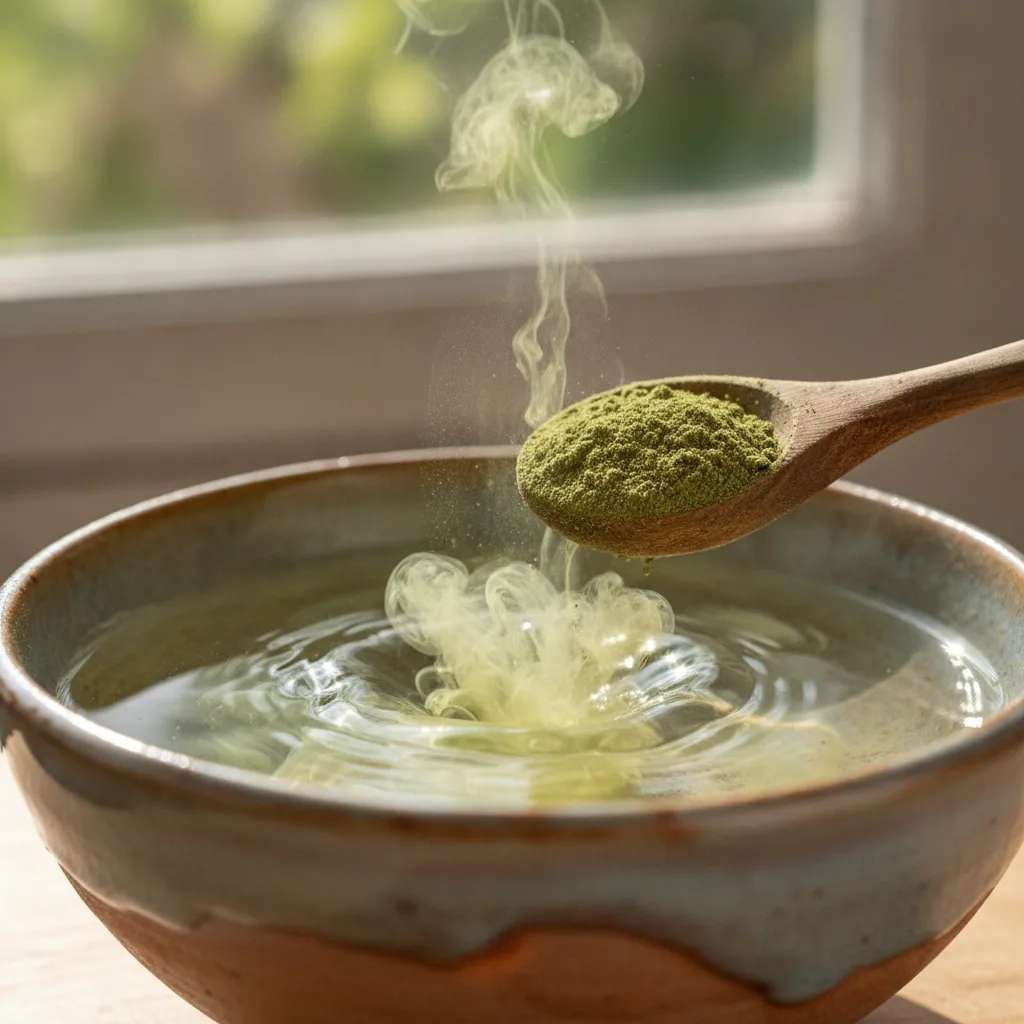
Modern experiments show that combined heating and fluid shear—what some researchers call synergistic heating and fluid shear—can lower kinetic barriers and promote ordered assembly. Under these conditions, molecules such as glycosylated flavonoids and alkaloids realign from metastable aggregates into ordered, left- or right-handed nanoribbons.
This transformation typically occurs in pure aqueous phases without chemical modification of constituent molecules. The process is therefore compatible with extraction workflows that prioritize minimal inputs and clean chemistries. For primary experimental detail and supporting data, see this preclinical study.
Mechanistic features of supramolecular chirality
Assembly into chiral nanoribbons is driven by noncovalent interactions—stacking, hydrogen bonding, and ionic pairing—modulated by temperature, concentration, and shear rate. These parameters control ribbon pitch, handedness, and packing density, all of which influence how fast constituent molecules can dissociate and become available in biological environments.
Control over these parameters enables predictable, reproducible mesostructures that can be characterized by electron microscopy, circular dichroism spectroscopy, and scattering methods. Standardization is essential, as discussed in Top 10 Ways Turmeric Supports Wellness: Bioavailable Curcumin Insights for 2026.
Structural Outcomes: From Metastable Aggregates to Ordered Nanoribbons
Conventional extraction emphasizes yield and concentration of marker compounds. The supramolecular perspective adds a complementary focus: mesoscale organization. Aggregates with low order tend to dissociate rapidly in aqueous physiological environments, whereas chiral nanoribbons present a more stable architecture.
Consequently, the nanoribbon form often exhibits a slower, steadier release of constituent molecules. This physical modulation of release kinetics can be advantageous when a consistent presence of actives in the gastrointestinal tract is desirable for maintaining normal metabolic processes, echoing the need for bioavailable herbal supplements.
Gastrointestinal Stability and Residence Time Benefits
Simulated digestion experiments reveal that chiral nanoribbons better resist rapid dissociation when compared with amorphous aggregates. The structural coherence of ribbons reduces premature breakdown, enabling a prolonged, controlled release along the gastrointestinal tract.
In preclinical pharmacokinetic evaluations, assemblies that maintain structural integrity in digestive environments correlate with extended mean residence times for marker compounds. Extended residence times can improve the window for physiological interaction without implying clinical claims about disease management. This process contributes to improved absorption similar to what’s emphasized for Exploring Bioavailable Chlorophyll Powder for Modern Wellness.
Observed Effects on Lipid Handling Pathways in Preclinical Models
Preclinical studies report that materials prepared as ordered nanoribbons can influence cellular pathways related to lipid turnover and lysosomal activity in experimental settings. Data indicate modulation of signaling axes associated with autophagy and lysosomal biogenesis in animal models, which is consistent with enhanced cellular lipid processing under those experimental conditions.
Language here is intentionally support-focused: the evidence suggests these supramolecular forms support healthy lipid-handling pathways in controlled studies, rather than making therapeutic or disease claims. For more on botanicals that impact metabolic pathways, the article Papaya Extracts and Brain Health: Neuroprotective Insights for 2026 offers relevant discussion.
Formulation and Process Control Recommendations
To reproducibly form chiral nanoribbons, control the following key variables:
- Temperature profile during extraction (ramp, hold temperature, cooling rate).
- Mechanical shear or stirring intensity and pattern.
- Extract concentration and ionic composition of the solvent.
- Extraction duration and vessel geometry.
Analytical monitoring—using microscopy, spectroscopy, and release testing—should be incorporated as part of process validation to confirm the desired mesostructure and release profile, reflecting the rigorous standards seen in Konyak Herbal Formulation: Exploring Non-GMO Phytochemical Synergy for Cellular Health in 2026.
Analytical Methods to Characterize Chiral Nanoribbons
Recommended characterization techniques include transmission electron microscopy (TEM) for morphology, circular dichroism (CD) for chirality, dynamic light scattering (DLS) for size distribution, and in vitro release assays under simulated digestion conditions. Combining orthogonal methods provides confidence in structure–function assignments, a principle supported in Advancing Pharmaceutical Science Education: 2026 Insights on Organic, Sustainable Innovation.
Practical Implications for Sustainable Herbal Manufacturing
Because nanoribbon formation can be achieved in aqueous systems without synthetic additives, the approach aligns with sustainability objectives such as reduced solvent use and simplified supply chains. Standardizing thermo-mechanical parameters allows manufacturers to optimize for both environmental footprint and functional performance.

Safety and Regulatory Considerations for Botanical Nanostructures
This article focuses on mechanistic and process-level findings; it does not make therapeutic claims. When presenting data, avoid clinical language and ensure all statements about biological effects use non-therapeutic formulations such as “supports” or “promotes” healthy cellular function.
Manufacturers should maintain transparency in ingredient sourcing and provide validated analytics for identity and composition. Any health-related labeling must comply with relevant regional regulatory frameworks for dietary supplements or herbal products. To further understand compliance, see Understanding Herbal Supplement Regulation and 2026 Recall Insights.
Research Gaps and Future Directions
Open questions remain around scaling assembly processes, long-term stability of nanostructures under storage conditions, and translatability across diverse botanical matrices. Future studies should aim to map process parameter spaces for different plant chemistries and develop standardized assays that link mesoscale structure to functional outcomes.
For further technical detail and experimental protocols described by investigative teams, see the source summary.
Practical Takeaways for Researchers and Formulators
- Evaluate decoction not only for extraction yield but also for supramolecular organization.
- Implement controlled heating and shear as process levers to favor ordered assembly.
- Use orthogonal analytical methods to confirm chirality and release behavior.
- Frame biological effects with support-focused, non-therapeutic language in publications and labeling.
By centering process control and mesostructural analytics, herbal extraction can transition from artisanal practice to reproducible manufacturing, advancing both sustainability and functional consistency.
Learn more about process-driven supramolecular assembly and apply controlled decoction parameters to optimize botanical formulations. Review the technical literature and incorporate standardized analytics to support consistent, sustainable product development.
Frequently Asked Questions
-
What are chiral nanoribbons and how do they form during herbal decoction?
Chiral nanoribbons are ordered, helical supramolecular assemblies that arise when botanical compounds self-organize under combined thermal and mechanical inputs. In decoction, controlled heating and stirring promote noncovalent interactions—stacking, hydrogen bonding, and ionic pairing—that reorganize metastable aggregates into stable ribbon-like structures while preserving the original chemical constituents. Find related insights on the supramolecular perspective in Konyak Herbal Formulation.
-
Why is supramolecular chirality important for botanical extract performance?
Supramolecular chirality affects how tightly molecules pack and how they dissociate in physiological environments. Chiral nanoribbons typically provide improved structural stability and more controlled release profiles compared with amorphous aggregates. This influences residence time and the steady availability of botanical components without altering their chemical identity. For applications focusing on bioavailability, see Bioavailable Herbal Supplements: Optimizing Cellular Wellness in 2026.
-
Which process variables most influence nanoribbon assembly during decoction?
Key variables include temperature profile (ramp and hold), stirring or shear intensity, extraction duration, solvent ionic composition, and extract concentration. Together, these factors determine kinetic barriers and thermodynamic preferences that favor ordered assembly. Reproducible control of these parameters improves batch-to-batch consistency, a key discussed in Cultivating the Best Organic Herbal Teas at Home.
-
How do chiral nanoribbons affect gastrointestinal stability and release?
Chiral nanoribbons present a coherent, ordered architecture that reduces rapid disassembly under simulated digestion conditions. Because this structural integrity slows dissociation, it enables a more gradual, sustained release of constituent molecules throughout the gastrointestinal tract, supporting steady exposure in preclinical studies. For more on release kinetics, visit Exploring Bioavailable Chlorophyll Powder for Modern Wellness.
-
What analytical techniques confirm the presence and chirality of nanoribbons?
Transmission electron microscopy (TEM) and atomic force microscopy (AFM) reveal morphology, circular dichroism (CD) detects supramolecular chirality, dynamic light scattering (DLS) characterizes size distribution, and in vitro release assays under simulated digestion verify functional release profiles. Combining multiple methods strengthens structure–function interpretation, as highlighted in Advancing Pharmaceutical Science Education.
-
Are these nanoribbon formation methods compatible with sustainable manufacturing?
Yes. Nanoribbon assembly can be achieved in water-based extraction without synthetic additives, which reduces solvent use and simplifies downstream processing. Standardizing thermo-mechanical parameters also supports reproducibility and can align with sustainability and clean-label objectives in botanical manufacture. Explore more in Natural Food Innovation and Category Growth: Top Organic Trends for 2026.
-
Do chiral nanoribbons change the chemistry of botanical constituents?
No. The assembly into nanoribbons is a supramolecular reorganization that preserves the covalent chemistry of the constituent molecules. The functional changes arise from mesoscale packing and release behavior rather than chemical modification of the actives.
-
What are the next research priorities to advance nanoribbon-based formulations?
Priority areas include mapping process–structure relationships across diverse botanicals, scaling thermo-mechanical assembly for industrial production, assessing long-term storage stability of nanostructures, and developing standardized assays that quantitatively link mesoscale structure to functional outcomes.