


In-Depth Analysis: How Organic Herbal Teas May Influence Prescribed Drug Efficacy in 2026
In 2026, consumers increasingly ask how organic herbal tea interactions with medications may influence enzyme pathways linked to cardiovascular and metabolic health. This article reviews recent in vitro findings, extraction methods that preserve phytonutrients, and practical guidance for integrating botanicals alongside common pharmaceutical regimens. The aim is to summarize mechanistic evidence and provide clear, evidence-aligned considerations for informed decision-making.
Why understanding herbal tea interactions matters for everyday medication use
Interest in organic, sustainably sourced herbal teas has grown as people seek supportive nutritional options. Understanding herbal tea interactions can help individuals and clinicians anticipate complementary effects on enzymatic activity that influence circulatory tone and glucose metabolism. This is about informed use, not claims of cure or treatment.
How compound profiles in tea influence biochemical pathways
Herbal blends contain dozens to hundreds of bioactive molecules. When brewed as people typically prepare tea, a mix of polyphenols, flavonoids, anthocyanins, polysaccharides, and other water-soluble constituents is released. Those compounds can interact with metabolic enzymes and transport systems in test-tube studies, which provides mechanistic hypotheses for how real-world consumption might affect medication action.
Key botanical components and their supportive roles
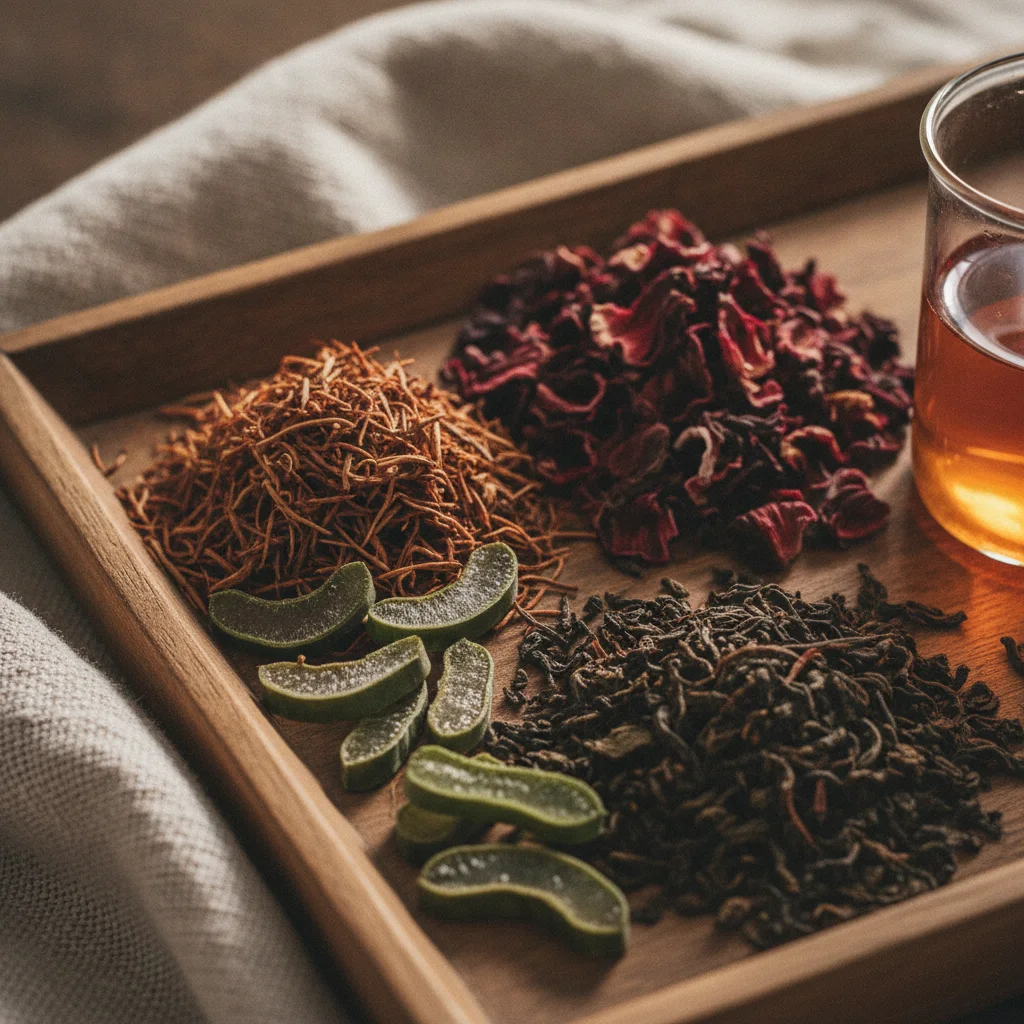
- Rooibos (Aspalathus linearis) contains polyphenols that are associated with antioxidant activity and mild effects on vascular-related biochemical markers. These properties may influence pathways relevant to circulatory function.
- Black tea (Camellia sinensis) provides catechins and flavonols that have been shown in laboratory settings to affect nitric oxide-related signaling and other vascular-supportive processes.
- Hibiscus delivers anthocyanins and related compounds commonly studied for their influence on vascular biomarkers and antioxidant status.
- Aloe species contain polysaccharides and other water-soluble constituents that are investigated for their effects on digestion-related enzymes and metabolic signaling.
These botanical profiles do not imply therapeutic claims. Instead, they inform potential interactions and areas where further human research is needed.
Brewing methods: bridging laboratory models and consumer practice
How tea is prepared determines which constituents are present in the cup, and therefore which interactions are plausible. The 2026 in vitro work mirrored common home preparation parameters to increase real-world relevance. For example, extended steeping times and water-only extraction were used to reflect how consumers prepare larger infusions.
Water-based extraction typically captures polar compounds and yields a nutrient matrix closer to everyday consumption than solvent-only extracts. Freeze-drying such an infusion preserves labile constituents for reproducible laboratory testing. These choices help researchers draw clearer connections between a home-brewed cup and the molecules examined in mechanistic assays.
What in vitro assays tell us about enzyme modulation
Laboratory enzyme assays are tools for detecting whether botanical extracts influence biochemical targets that play roles in circulatory or metabolic physiology. These in vitro models allow controlled measurement of inhibition or activation against specific enzymes associated with vascular tone and carbohydrate digestion.
Representative enzyme systems and observed effects
- Enzymes involved in circulatory regulation, such as angiotensin-converting enzyme (ACE) and renin in mechanistic studies, have shown sensitivity to certain polyphenolic-rich extracts in vitro. These findings suggest potential modulation of enzyme activity under controlled conditions.
- Digestive enzymes related to carbohydrate breakdown, such as alpha-glucosidase and alpha-amylase, have also been studied. Some botanical extracts demonstrate selective modulation of these enzymes in laboratory assays, which forms a basis for hypotheses about post-meal glucose metabolism support.
Laboratory results indicate functional activity under test conditions, but they do not equate to clinical outcomes. Human absorption, metabolism, and dosing differences must be considered before translating these observations into practice.
Safety signals from cell-based compatibility studies
Before testing enzyme effects, researchers often assess cellular viability to detect overt cytotoxicity. In cell-line assays that model liver and kidney cell types, lower, diet-relevant concentrations of aqueous tea extracts generally preserved viability. Higher concentrations sometimes reduced viability but often remained above thresholds commonly used to flag acute cytotoxicity in vitro.
These compatibility data are useful for selecting test concentrations for enzyme work and for generating initial safety hypotheses. They are not substitutes for controlled human safety studies or clinical pharmacology assessments.
Interaction potential when herbal infusions are combined with medications
Combination testing in vitro can reveal whether an herb and a medication act additively, synergistically, or independently on the same biochemical endpoint. Recent laboratory work evaluated herbal tea extracts alongside representative cardiovascular and metabolic medicines in enzyme assays.
In several controlled experiments, mixtures of tea extracts and medication standards produced greater enzyme modulation than either component alone. In vitro synergy highlights the importance of anticipating additive biochemical effects when botanicals are used concurrently with pharmaceutical agents. This supports the need for communication between consumers and healthcare professionals.
For more detail on the experimental design and results, consult the 2026 in vitro study report linked here and below. These materials provide the raw methodology and data that underpin the mechanistic observations: the 2026 in vitro study.
Translational considerations: from bench science to real-world use
Lab-based enzyme modulation does not directly predict clinical outcomes. Several translational factors influence whether in vitro observations manifest in humans:
- Absorption and first-pass metabolism alter which compounds reach systemic circulation.
- Individual variability in metabolic enzymes and gut microbiota affects how botanical constituents are transformed.
- Dose and timing relative to medication intake change interaction likelihood.
These variables mean that observed biochemical synergy in vitro should prompt careful, evidence-based evaluation rather than immediate changes to medication regimens.
Practical guidance for informed, mindful integration
- Document intake: Keep a written list of herbal products and teas consumed, including estimated daily amounts and preparation methods.
- Share information: Discuss herbal tea use with prescribing clinicians or pharmacists so they can consider potential interaction scenarios within the context of an individual’s medication regimen.
- Timing considerations: Staggering the timing of medication and herbal tea intake may be advisable to reduce peak concentration overlap, though specific recommendations require individualized clinical judgment.
- Monitor clinically relevant markers: When changes to botanical intake are made, healthcare professionals may monitor blood pressure, metabolic markers, or other appropriate endpoints to ensure stability.
- Prioritize quality: Choose sustainably sourced, certified organic teas when possible, and favor products with transparent sourcing and certificates of analysis to reduce variability in constituent profiles.

For readers who want to review the primary mechanistic data, the 2026 report provides an accessible summary of methods and results: read the laboratory report.
Population relevance and sustainability in 2026
As urban populations incorporate traditional herbal practices into contemporary regimens, understanding interaction potential becomes more relevant globally. Sustainable agricultural practices and supply-chain transparency improve product consistency and make mechanistic findings more generalizable.
Traceability and third-party analytical testing help clinicians and consumers better understand what is in a given blend. This information supports safer, evidence-aligned conversations between individuals and their healthcare teams.
Research gaps and the next steps for evidence generation
Key research priorities include standardized human pharmacokinetic studies, controlled interaction trials, and real-world observational research that examines outcomes when botanicals and medications are used concurrently. Until such data are available, laboratory evidence should be viewed as hypothesis-generating rather than definitive guidance for medication adjustments.
Responsible use: summary takeaways
- Herbal tea interactions can influence enzyme systems in vitro; these findings form the basis for informed clinical discussion rather than immediate therapeutic changes.
- Water-based preparation and sourcing transparency matter for which constituents are present in a consumer cup.
- Open communication with healthcare professionals and careful monitoring are recommended when integrating herbal teas with pharmaceutical regimens.
By focusing on mechanisms, responsible sourcing, and clinician engagement, consumers and practitioners can make evidence-aligned decisions that respect both traditional botanical knowledge and modern pharmacology.
For clinicians, wellness professionals, and informed consumers: review the mechanistic literature, document herbal intake, and discuss any botanical use with prescribing clinicians or pharmacists. Prioritize products with transparent sourcing and certificates of analysis. Use evidence-based dialogue to support safe, personalized decisions about integrating organic herbal teas into daily routines.
Frequently asked questions
-
What does the term ‘herbal tea interactions’ mean in the context of medication use?
‘Herbal tea interactions’ describes how compounds in brewed botanical infusions can influence biochemical pathways or enzymes that are also targeted by medications. In vitro studies identify potential points of overlap, which informs clinical discussions rather than serving as direct evidence to change medications.
-
How should I prepare herbal tea to reflect the conditions used in laboratory studies?
Laboratory work often mirrors extended water-based steeping to approximate a consumer-style infusion. Typical parameters include sustained steeping in boiling water followed by cooling. Freeze-dried infusions are used for standardized lab testing, but home preparation with water-only extraction captures a similar mix of polar constituents.
-
Are laboratory enzyme effects the same as effects people will experience after drinking tea?
No. In vitro enzyme assays identify biochemical modulation under controlled conditions. Human outcomes depend on absorption, metabolism, gut microbiota, dose, and individual variability. These studies are hypothesis-generating and require clinical research to confirm real-world effects.
-
What practical steps reduce the risk of unintended interactions between herbal teas and medications?
Keep a record of all botanicals consumed, inform prescribing clinicians, consider timing to reduce peak overlap, and prioritize products with transparent sourcing. Healthcare professionals can advise monitoring strategies appropriate to an individual’s medications and health status.
-
Do sourcing and processing methods affect interaction potential?
Yes. Sourcing affects constituent profiles, and processing methods determine which molecules are present in the brewed cup. Water-based extraction captures polar phytonutrients, while certifications and certificates of analysis improve product consistency and interpretability of mechanistic data.
-
Should I stop drinking herbal tea if I take medication?
Not necessarily. Stopping is not usually required based on mechanistic in vitro data alone. Instead, discuss use with a healthcare professional who can evaluate potential interaction scenarios and recommend monitoring or timing adjustments as needed.
-
Where can I find the original laboratory data on botanical and medication combination testing?
The 2026 laboratory report detailing extraction methods, enzyme assays, and combination testing is publicly available. Review the original study to examine methodologies and raw findings so you can discuss implications with a clinician.
-
What research is needed to better understand herbal tea and medication interactions?
Human pharmacokinetics, controlled clinical interaction studies, and well-designed observational research are needed to translate in vitro observations into evidence-based guidance. Standardized product characterization will also improve study reproducibility and practical recommendations.