
2026 Organic Beauty Trends: Sustainably Sourced Hair, Scalp, and Skincare Innovations
Why 2026 Organic Beauty Trends Matter for Hair, Scalp, and Skin
The 2026 organic beauty trends reflect a shift toward sustainably sourced, USDA-certified botanicals that promote healthy hair, scalp, and skin function. Consumers and retail buyers alike are prioritizing ingredient transparency, minimal processing, and formulations designed for everyday use. The industry release linked below highlights many of these directions and offers context for the newest product formulations, connecting to a wider push for ingredient purity and wellness, such as discussed in Understanding Herbal Supplements: Best Organic and Sustainably Sourced Insights 2026.
Read the industry release for further details.
Formulating Next-Generation Routines with Certified Botanicals for Visible Radiance
Certified botanical oils and extracts increasingly serve as foundational components in 2026 product design. Formulators are prioritizing ingredient integrity and bioavailability so users can apply simple routines that deliver reliable sensory and functional benefits. As seen in Herbal Medicinal Products Market Outlook 2026: Demand, Trends & Non-GMO Insights, clean ingredient sourcing impacts both consumer trust and performance claims.
This movement favors oils and butters selected for complementary absorption profiles and sensory attributes. Combining lighter lipids with denser emollients creates balanced spreadability and lasting hydration without heaviness.
For more context on formulation themes in current launches, consult the recent industry release.
Boosting Routine Efficiency with Multi-Use Organic Oils
Multi-use formats are central to modern routines because they reduce regimen complexity and packaging waste. Oils and serums designed for hair, scalp, lashes, and skin simplify regimens for consumers with busy lifestyles, offering both practical and eco-friendly solutions. The drive for eco-optimized products mirrors strategies reported in Best Eco-Friendly and Zero Waste Products for Sustainable Living in 2026.
Formulators emphasize light textures and minimal fragrance so products are compatible across application zones. This flexibility supports streamlined daily care while maintaining sensory appeal.
Choosing the Right Botanical Oils: Function and Feel
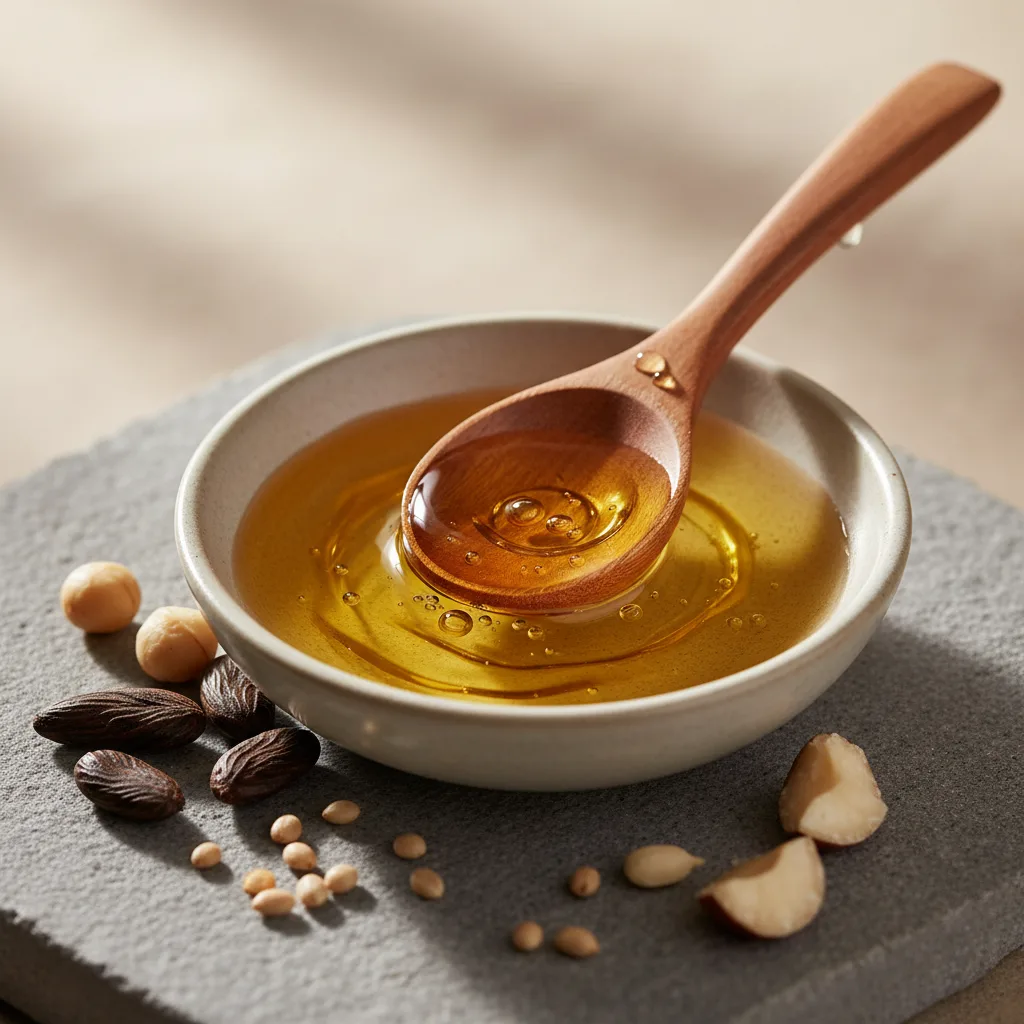
A carefully curated oil blend can deliver a range of tactile and functional benefits. The oils most commonly featured in 2026 formulations include castor, jojoba, marula, fractionated coconut, macadamia, and rare lipids such as pracaxi and murumuru. Strategic blending of these oils is also reflective of broader trends detailed in Natural Food Innovation and Category Growth: Top Organic Trends for 2026.
These oils are selected for distinctive fatty acid profiles, absorption speeds, and sensory characteristics. Blending them enables a product to combine immediate smoothness with sustained emolliency.

Key Botanical Attributes for Everyday Use
-
Jojoba-like lipids offer sebum-like feel and help maintain scalp moisture balance.
-
Light antioxidants in marula and select fruit extracts add a fast-absorbing glow to facial skin.
-
Fractionated coconut provides a silky finish ideal for hair gloss without a greasy residue.
-
Denser oils such as castor contribute to thicker texture and prolonged surface conditioning.
Each ingredient is chosen to complement others rather than act as a single “hero” component, aligning with the collaborative formulation strategies shaping the category. This “teamwork” approach in botanicals also echoes holistic views in Exploring Six Centuries of Herbal Wisdom: The Roots of Healing for 2026.
Maximizing Bioavailability Through Ingredient Synergy
Bioavailability is a central concept in modern botanical formulation. It pertains to how effectively nutrients, lipids, and actives are delivered to the skin or hair surface and how they interact with the local lipid environment. Innovations in this area are parallel to evidence presented in Bioavailable Menopause Support Ingredients: Non-GMO Reviews & Analysis 2026, highlighting the role of formulation science.
Formulators combine oils with varying penetration profiles so users experience both immediate sensory benefits and longer-lasting conditioning. This layered approach underpins many of the performance claims in current product lines.
How Blends Improve Functional Outcomes
-
Complementary fatty acids create a fuller nutrient spectrum than single-oil solutions.
-
Alternating fast-penetrating and slow-linger oils provides controlled release of emollients.
-
Thoughtful ratios improve spreadability and reduce perceived greasiness on the scalp or face.
This strategic blending contributes to the practical, multitasking nature of modern organic beauty offerings, just as advanced blends drive better efficacy in health products as described in Moringa Leaf Powder: 2026 Market Growth, Sustainable Sourcing, and Bioavailable Nutrition.
Certification and Clean Processing: What Retailers and Buyers Should Expect
Certification remains a non-negotiable cue for many consumers. USDA organic and non-GMO verification provide independent confirmation of sourcing and processing standards similar to compliance requirements for supplements outlined in Analyzing Health Claims on Food Supplement Labels: Compliance, Consumer Understanding, and the Future of EU Regulation 2026.
These labels signal that cultivars were grown under restricted pesticide and fertilizer regimes, and that the plant inputs are not genetically engineered. For buyers, certification supports consistent claims and simplifies procurement decisions.
Verification as a Signal of Supply-Chain Integrity
-
Third-party certification helps ensure traceability from farm to finished formulation.
-
Clean processing—minimal refining and avoidance of harsh solvents—helps preserve botanical profiles.
-
Certifications are increasingly requested by retailers to meet consumer expectations for transparency.
Extraction and Processing Methods That Preserve Potency
Extraction choices directly affect nutrient retention and product character. Cold-pressing retains thermolabile constituents without solvent exposure. Fractionation isolates lighter fractions for improved spreadability—practices that have parallels in food and beverage sectors as well, discussed in Cocoa Fiber Market Analysis, Bioavailable Trends & Global Forecast 2026.
Sourcing partnerships with growers and cooperatives also play a role in environmental stewardship and ingredient traceability. These practices align with consumer priorities that define the category in 2026.
Practical Extraction Considerations
-
Cold-press limits heat exposure and preserves delicate lipids.
-
Fractionation improves sensory performance for topical use on hair and face.
-
Responsible sourcing reduces risk of supply-chain disruption and supports social sustainability.
Safety, Assessment, and Daily-Use Considerations
Products entering the market typically undergo a battery of assessments to evaluate skin compatibility and stability rather than to establish medical outcomes. This includes irritation screening, compatibility testing, and stability assessments under simulated use conditions.
Manufacturers present testing data to retail buyers and consumers to support tolerability claims and product robustness during normal handling. This open sharing of product data mirrors expectations in broader natural wellness markets, such as found in Are Herbal Detox Supplements Safe? Doctors’ Warnings and 2026 Non-GMO Reviews.
Interpreting Safety and Tolerance Claims
-
Look for language that describes evaluations for irritation and skin compatibility rather than absolute guarantees.
-
Stability testing indicates whether a formulation preserves its sensory and compositional attributes after exposure to light and air.
-
Transparent reporting of testing protocols helps buyers compare product claims objectively.
Sustainable Packaging and Circularity in 2026 Offerings
Sustainability extends beyond ingredient origin to packaging and end-of-life considerations. Refillable formats, recyclable materials, and reduced plastic use are common features in new launches. This is part of the zero waste and eco-responsibility movement chronicled in Best Eco-Friendly and Zero Waste Products for Sustainable Living in 2026.
These choices address consumer demand for lower waste while supporting brand commitments to environmental responsibility.
Packaging Practices to Watch For
-
Refillable or concentrated formats that lower transport emissions.
-
Minimalist secondary packaging to decrease overall resource use.
-
Use of recycled content and design for recyclability.
Retail and Wholesale Opportunities Created by These Trends
Retailers and wholesale partners can capitalize on these trends by curating certified, multi-use offerings that align with sustainability values. Clear, evidence-based product claims and consistent certifications simplify shelf selection. These approaches are key in many natural product sectors, as covered by U.S. Herbal Medicine Market Growth: Best Organic & Non-GMO Insights for 2026.
Educating retail staff on ingredient functionality and application versatility helps convert informed shoppers into repeat customers.
Practical Tips for Merchandising Certified Botanicals
-
Group multi-use oils by sensory profile to guide sampling and pairing advice.
-
Provide visible certification badges and short notes on extraction and sourcing practices.
-
Encourage testers or sample sizes to let consumers experience texture without committing to full-size purchase.
Closing Perspective: Why These Trends Are Here to Stay
The convergence of certification, clean processing, and multi-functional formulation reflects a mature market shift rather than a transient fad. Consumers seek products that align with personal values and fit streamlined routines, creating durable demand for certified, bioavailable botanicals.
For additional context and current release details, see the full industry release.
Explore certified, sustainably sourced botanicals and multi-use formulations designed for everyday hair, scalp, and skin care. Whether you are curating retail assortments or optimizing professional offerings, prioritize products with transparent certifications and clean processing details to meet 2026 consumer expectations.
Frequently Asked Questions about 2026 Organic Beauty Trends
1. What defines the core elements of 2026 organic beauty trends?
Core elements include sustainably sourced botanicals, USDA organic and non-GMO verification, minimal processing to preserve potency, and multi-use formulations that simplify routines while promoting healthy hair, scalp, and skin function. These priorities are supported by perspectives on sustainable sourcing in Understanding Herbal Supplements: Best Organic and Sustainably Sourced Insights 2026.
2. How should retailers evaluate USDA and non-GMO credentials?
Retailers should verify certification documentation, review ingredient lists for alignment with label claims, and ask for supplier traceability information to confirm compliance with clean processing and sourcing standards. This is similar to strategies discussed in Analyzing Health Claims on Food Supplement Labels: Compliance, Consumer Understanding, and the Future of EU Regulation 2026.
3. Why is bioavailability emphasized in modern plant-based skincare?
Bioavailability matters because it influences how effectively plant nutrients and lipids interact with skin and hair surfaces. Formulations that optimize absorption and retention can improve sensory performance and perceived benefits, a concept seen across many wellness trends such as Bioavailable Menopause Support Ingredients: Non-GMO Reviews & Analysis 2026.
4. Are multi-use botanical oils appropriate for sensitive skin and scalp?
Many multi-use oils are formulated to be lightweight and minimally fragranced, and they often undergo compatibility assessments. Consumers with sensitivity should patch-test and choose formulations labeled for tolerance and non-irritating evaluation. Insights into gentle formulas also appear in Are Herbal Detox Supplements Safe? Doctors’ Warnings and 2026 Non-GMO Reviews.
5. What extraction methods are favored to preserve botanical quality?
Cold-pressing and careful fractionation are commonly favored because they minimize heat and solvent exposure, helping preserve delicate fatty acids and labile nutrients essential to botanical performance.
6. How do brands demonstrate safety and stability for daily use?
Brands typically conduct irritation screening, compatibility testing, and stability studies. These assessments evaluate tolerance across a range of skin types and ensure formulations maintain integrity under expected storage and use conditions. Transparency is key, aligning with consumer trust themes across categories.
7. What packaging practices support sustainability in 2026 beauty launches?
Sustainable practices include refillable systems, recycled or recyclable materials, reduced secondary packaging, and concentrated formats that lower transport impact. These choices help meet consumer expectations for circularity, supporting strategies highlighted in Best Eco-Friendly and Zero Waste Products for Sustainable Living in 2026.
8. How can wholesalers and salons select certified botanicals for professional use?
Choose products with clear certification, transparent sourcing policies, and documented testing. Sampling small quantities and reviewing supplier traceability helps ensure consistency and client satisfaction in professional settings.
9. What role do consumer reviews play in shaping these trends?
Consumer reviews provide insight into sensory feel, perceived efficacy, and packaging performance. They help brands refine formulations and assist buyers in selecting products that align with real-world expectations and sustainability claims.
10. How can consumers incorporate certified organic oils into simple routines?
Start with a lightweight multi-use oil applied sparingly to damp hair ends or lightly massaged into the scalp, or as a targeted facial oil after moisturizing. Minimal, consistent use helps integrate botanicals without complicating existing routines.