


Black Seed Oil: Reviewing Non-GMO Inflammation Support and Bioactive Potential for 2026
Unlocking Black Seed Oil: What 2026 Evidence Shows about Supportive Bioactivity
Black seed oil is one of the most discussed botanicals in contemporary wellness circles. The phrase black seed oil appears throughout consumer searches and scientific summaries alike. This article synthesizes modern phytochemistry, extraction science, and the best available human studies to clarify how black seed oil may support inflammatory balance and metabolic resilience in 2026. For a critical review of some popular claims, see this evidence-focused analysis.
Bioactive Profile and Consumer Relevance
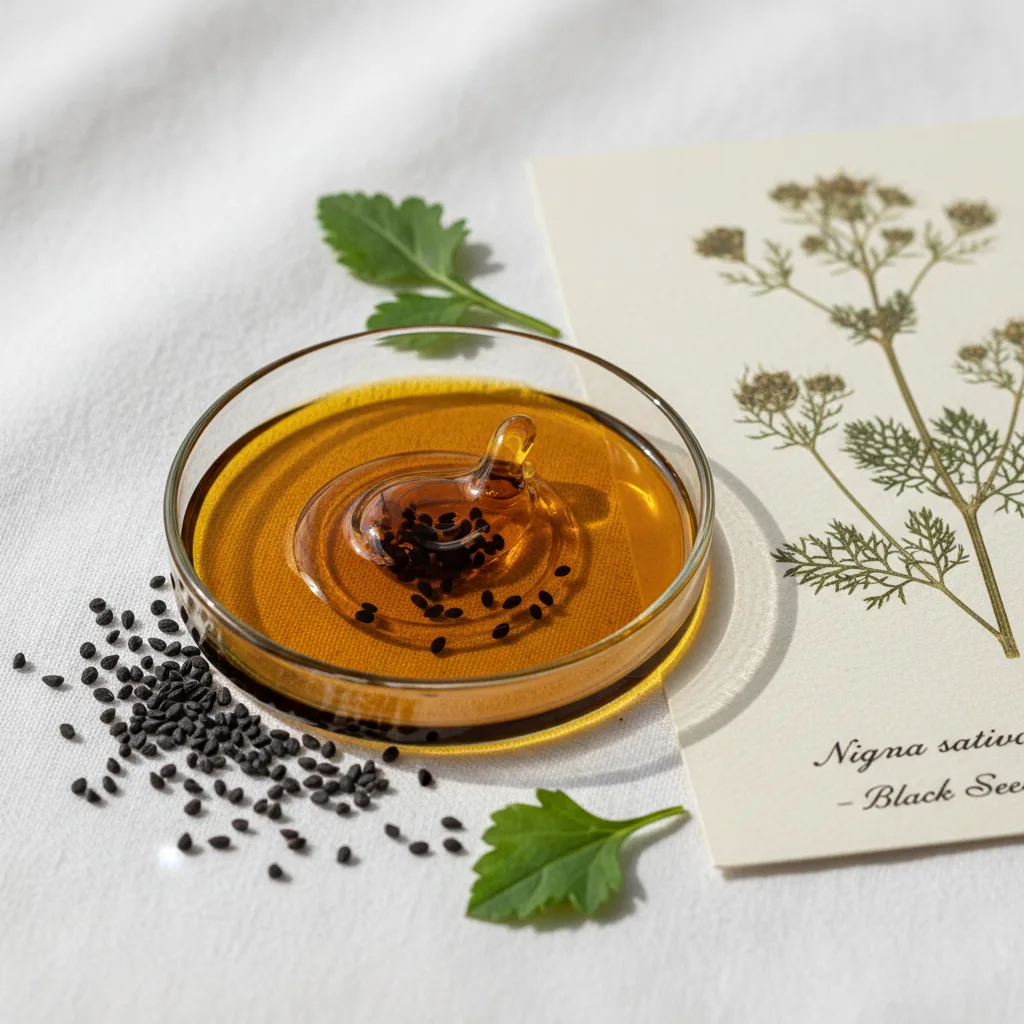
Nigella sativa seeds yield an oil containing a complex mix of volatile and non-volatile phytochemicals. Among these, thymoquinone is the most extensively studied compound for its biological activity in preclinical settings.
Other constituents include alkaloids (nigellidine, nigellicine) and unsaturated fatty acids. This phytochemical diversity helps explain the interest in black seed oil for supportive roles in human wellness, while also motivating standardized testing and transparent labeling.
In the context of bioactive plant extracts, you may also be interested in studies on Papaya Leaf Extract Market: Bioactive Trends & Sustainable Growth Insights 2026 for a broader understanding of current plant-based supplement trends.
Extraction Method, Potency, and Consumer Choice
Extraction affects the chemical fingerprint of black seed oil, which in turn influences bioactive availability. Cold-press extraction tends to preserve volatile oils and heat-sensitive compounds better than high-heat methods.
Consumers concerned with potency and sustainability often prefer transparent sourcing and third-party purity testing. Cold-pressed, non-GMO verification, and certificate of analysis (COA) data are practical markers to consider when assessing product quality.
For those interested in non-GMO and organic practices, see how these principles are shaping the herbal space with Starting a Home Herbal Tea Garden: Best Organic and Non-GMO Insights for 2026.
Cellular Mechanisms of Thymoquinone
Laboratory research has characterized several cellular pathways influenced by thymoquinone. These studies report modulation of oxidative stress markers and signaling molecules involved in natural inflammatory responses.
Such mechanistic work is valuable for hypothesis generation. It helps researchers design clinical trials that address dosage, delivery form, and population characteristics relevant to human outcomes.
Ongoing advancements in laboratory technologies for supplement quality are outlined in Revolutionizing Natural Product Research: Automated Plant Analysis for 2026.
Interpreting Preclinical and Animal Data with Appropriate Caution
Animal and cellular studies often report measurable effects of black seed oil constituents under controlled conditions. These findings provide biological plausibility but are not direct evidence of consistent effects in people.
Variability in animal models, dosing regimens, and endpoints highlights the need for carefully designed human research before broad generalizations about efficacy can be made.
Readers who are cautious about over-interpreting wellness study findings might benefit from the perspective in Are Daily Supplements Overhyped? 2026 Guide for Informed Choices.

Human Research Summary: Inflammation and Clinical Signals
Small-scale clinical trials have examined black seed oil supplementation and reported changes in select inflammatory biomarkers in some study populations. These trials are limited by sample size, study duration, and variability in product standardization.
Current human data suggest black seed oil may support healthy inflammatory balance when used as part of a broader lifestyle and dietary approach. Larger and more diverse trials are necessary to strengthen confidence in specific outcomes.
If you are curious about consumer cautions and future directions in natural health, the resource Emerging Trends in Natural Wellness: Insights and Consumer Cautions for 2026 is helpful.
Metabolic Resilience and Glucose Regulation
Research into metabolic endpoints has used black seed oil as a supplemental adjunct in controlled settings. Some trials report modest improvements in fasting glucose measures, while results for insulin sensitivity are less consistent.
These outcomes suggest a potential supportive role for black seed oil within a comprehensive metabolic health plan. It is not a replacement for established nutritional and clinical strategies.
Additionally, products designed for metabolic wellness may benefit from the attention to ingredient transparency as discussed in Ingredient Transparency in Skincare: Safe Enough to Eat? | 2026 Organic Review.
Population Considerations and Study Generalizability
Many trials have been conducted within specific geographic or demographic populations, which may limit global generalizability. Differences in diet, genetics, and concurrent therapies can influence outcomes.
Standardizing study approaches, including product characterization (thymoquinone content, extraction method), would improve comparability across future investigations.
For discussions around population-specific wellness strategies, Safeguarding Wellness: Best Organic Vitamin Supplements and 2026 Non-GMO Quality Insights offers informed recommendations.
Nervous System Investigations: Early and Provisional
Interest in nervous system support has grown, with some preliminary clinical studies exploring adjunctive use of thymoquinone-containing extracts. Results are early and, in many cases, pending peer-reviewed publication.
Until comprehensive human data are available, conclusions about direct effects on nervous system function should remain provisional and framed as areas for further research.
For botanicals believed to affect neurological wellness, you may want to read about the adaptogenic properties of Exploring Pleuropterus multiflorus: Ancient Botanical Insights for Hair Vitality in 2026.
Marketing vs. Evidence: Separating Hype from Data
Social media often simplifies complex science into sensational claims. For example, viral assertions that a single ingredient is the “most anti-inflammatory food” do not reflect the nuance of the research.
A measured approach recognizes black seed oil as a potentially supportive botanical, not a universal solution. For critique of exaggerated claims, see this critical review.
Practical Guidance for Prospective Users
If you are evaluating black seed oil, prioritize products with transparent sourcing, non-GMO verification, and available COAs showing thymoquinone concentration. Such information helps consumers assess the likely bioactive content of a supplement.
Start with recommended dosages reported in clinical studies rather than social-media-driven regimens. Monitor individual responses and integrate supplementation within a balanced nutritional and lifestyle framework.
For readers pursuing home-based, natural solutions, further insight can be found in Cultivating Homegrown Herbal Teas: Best Organic, Non-GMO Picks for 2026.
Formulation and Delivery: Improving Absorption
Delivery formats—such as encapsulation, emulsification, or standardized oil capsules—can affect absorption and user experience. Advanced formulations may improve uptake of lipophilic constituents like thymoquinone.
Look for third-party testing and product transparency as indicators of consistent quality across production batches. If ingredient quality and transparency are concerns, learn more from Myrrh Powder Market Forecast 2026: Premium Wellness Demand and Global Trends.
Sustainability, Traceability, and Ethical Sourcing
Demand for sustainably sourced botanicals has increased. Traceability from seed to finished product, fair labor practices, and responsible land stewardship are practical sustainability markers.
Non-GMO verification and organic certification are complementary considerations that some consumers prioritize when selecting botanical oils. Broader market sustainability can be compared with global trends highlighted in Medicinal and Aromatic Plant Market: Best Organic Trends and 2026 Global Outlook.
Research Gaps and Priorities
Key research needs include larger randomized trials with standardized product characterization, diverse participant populations, and clinically relevant endpoints.
Dose–response studies and long-term safety assessments are also priorities. Improved interoperability between preclinical mechanisms and clinical trial design will strengthen the translation of laboratory insights into human health contexts.
Additional emerging industry directions can be reviewed in Wellness Brand Synergy: 2026 Trends in Sustainable Aromatherapy and Natural Health.
Final Perspective: Evidence-Informed Integration
Black seed oil has a complex phytochemical profile that warrants continued scientific attention. In 2026, it is best framed as a botanical with potential supportive roles in inflammatory balance and metabolic resilience, pending larger human trials.
Thoughtful product selection, attention to extraction and testing, and integration with established lifestyle strategies are practical steps for consumers interested in exploring this botanical. For readers seeking a critical appraisal of popular claims, consult the external analysis at: this expert review.
When exploring black seed oil options, prioritize non-GMO verification, clear extraction methods, and independent testing data. Integrate any supplementation into a balanced nutrition and lifestyle plan, and consult a qualified healthcare professional for personalized guidance.
FAQs
-
What does current research say about black seed oil and inflammatory balance?
Current research indicates that black seed oil may support healthy inflammatory balance in some controlled studies. Most positive signals come from laboratory and small human trials, but larger, standardized clinical trials are needed to confirm consistent effects across populations and conditions. Emerging perspectives can be found in Emerging Trends in Natural Wellness: Insights and Consumer Cautions for 2026.
-
How important is extraction method when choosing black seed oil?
Extraction method matters because cold-pressing typically preserves volatile and heat-sensitive compounds, increasing the likelihood of retaining bioactive constituents. Consumers should look for transparent extraction details and third-party testing to better assess product integrity. These themes are echoed in Starting a Home Herbal Tea Garden: Best Organic and Non-GMO Insights for 2026.
-
Can black seed oil support healthy glucose metabolism?
Some randomized trials report modest improvements in fasting glucose measures with supplemental use, but results vary. Black seed oil may support healthy glucose metabolism as part of a broader dietary and lifestyle strategy rather than functioning as a standalone solution.
-
Are there safety concerns or common side effects with black seed oil?
Black seed oil is generally well tolerated at doses reported in clinical studies. Mild gastrointestinal symptoms or allergic reactions are possible. Individuals with medical conditions or those taking other therapies should consult a qualified healthcare professional before beginning supplementation.
-
What role does thymoquinone play in black seed oil activity?
Thymoquinone is a major phytochemical that has shown biological activity in preclinical studies, including effects on oxidative stress and inflammatory signaling. Human evidence remains limited, so thymoquinone serves as a focus for ongoing research rather than a confirmed therapeutic agent.
-
How can consumers verify the quality of black seed oil products?
Look for non-GMO verification, COAs showing phytochemical content (including thymoquinone), clear extraction method disclosure, and third-party purity testing. These elements improve transparency about product composition and manufacturing standards. For precise supplement safety best practices, see Understanding FDA Supplement Recalls and Safe Herbal Choices: Best Practices for 2026.
-
Should black seed oil replace conventional treatments for chronic conditions?
No. Current evidence supports black seed oil as a potential adjunctive, supportive component within a comprehensive health plan. It should not replace established medical or therapeutic approaches, and decisions should be made in consultation with qualified health professionals.
-
What research directions are most needed for black seed oil?
Priority areas include larger randomized controlled trials with standardized product formulations, diverse participant populations, dose–response studies, and longer-term safety evaluations. These studies will help establish clearer guidance for clinical and consumer use.