


Ghanaian Polyherbal Antimalarial Remedies: Efficacy, Safety, and Non-GMO Reviews for 2026
Ghanaian Polyherbal Blends 2026: Safety, Non‑GMO Reviews, and Bioavailability Insights
Ghanaian polyherbal blends are receiving heightened attention in 2026 from manufacturers, wholesalers, and quality‑conscious consumers seeking sustainably sourced botanical options. This guide focuses on laboratory bioactivity, safety profiling, non‑GMO verification, and chromatographic fingerprinting—core topics for buyers who prioritize traceability and measurable quality. For a detailed laboratory report referenced here, see this investigative science piece: laboratory report.
Why Ghanaian polyherbal blends matter for sustainable botanical sourcing
Ghanaian polyherbal blends capture rich ethnobotanical traditions while responding to modern supply‑chain and sustainability expectations. Ethical harvesting, non‑GMO planting practices, and post‑harvest handling influence batch purity and market trust. For suppliers and private‑label partners, documented traceability is increasingly a requirement for shelf placement and online discovery.
These blends are often composed of multiple plant matrices that require standardized extraction and testing to ensure consistent bioavailability. Buyers should expect transparent documentation showing origin, harvest date, and third‑party verification for non‑GMO claims. For a look at top bioavailable and sustainable botanicals in use globally, see the Five Essential Medicinal Plants for 2026: Best Bioavailable, Sustainably Sourced Herbals.
Urban distribution patterns and formulation diversity among Ghanaian blends
Wholesale channels in major Ghanaian trading centers concentrate product flows and shape what formulas reach regional and international markets. Market surveys show a small number of dominant blends shared across urban markets and local retailers. These formulations vary in botanical composition and extraction approach, which drives differences in organoleptic properties and measured laboratory profiles.
Commonly reported botanical constituents in sampled formulations include a mix of leaf, bark, and fruit extracts. Manufacturers differ in solvent choice, extraction time, and concentration steps. These factors affect phytochemical concentrations and downstream analytical results. Those interested in broader market dynamics may be interested in the Herbal Supplements Market Trends, Segmentation, and Innovations 2026.
Standardized extraction, molecular profiling, and the pursuit of consistent bioavailability
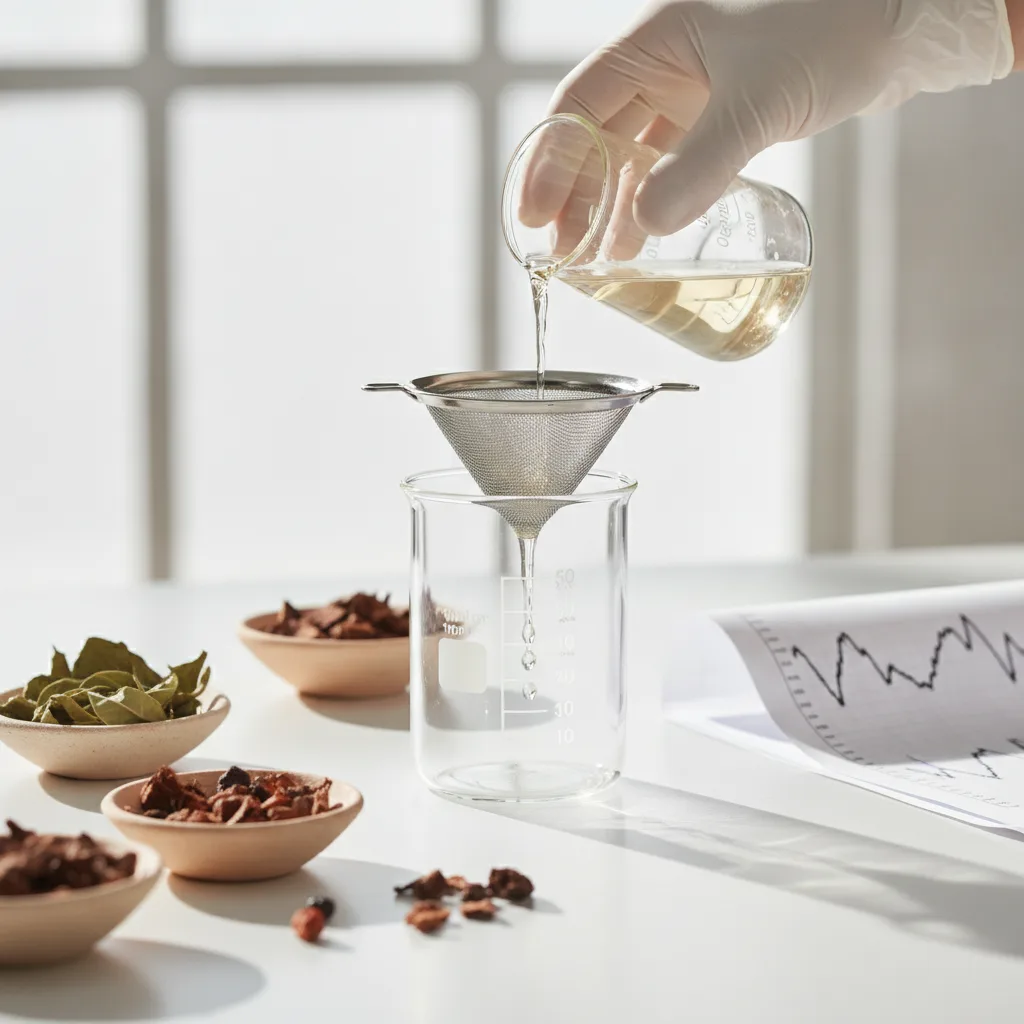
Extraction technique is a primary determinant of the final profile of a polyherbal blend. Producers commonly select aqueous, hydroalcoholic, or ethanol extractions depending on the polarity of target phytochemicals. Temperature control, filtration, and solvent removal steps are critical to maintaining molecular integrity and limiting degradation.
High‑performance liquid chromatography (HPLC) and Fourier‑transform infrared (FTIR) spectroscopy are now baseline tools for identity and purity confirmation in premium supply chains. Combined chromatographic and spectroscopic fingerprinting enables batch‑to‑batch comparison and supports claims of consistent bioavailability. Concepts about manufacturing bioactivity can also be explored in Manufacturing and RNA Integrity in Botanical Medicines: Unveiling Botanical Bioactivity 2026.
Laboratory measures: in vitro bioactivity assays and how to read reports
Reputable laboratories use controlled in vitro testing to generate reproducible measures of bioactivity for botanical blends. These assays are model‑based tools that indicate whether a formulation contains bioactive constituents under standardized conditions.
When reviewing laboratory reports, suppliers should note assay type, positive and negative controls, and the specific endpoints measured. Reports that include concentration‑response data, selectivity indices, and replicated runs offer stronger evidence of reproducible bioactivity. Deeper bioavailability insights can be found in Berberine Safety, Bioavailability, and 2026 Reviews: Separating Facts from Myths.
Interpreting selectivity and cytotoxicity results for safe formulation design
Cytotoxicity screening against non‑target human cell lines is a routine step in formulation assessment. A favorable selectivity index indicates that active constituents at tested concentrations are less likely to produce cell stress in non‑target assays.
Selectivity indices and MTT viability data help formulators set safe concentration ranges and inform dosage guidance for product labeling. For wholesale procurement, request full laboratory reports that document both bioactivity and cytotoxicity endpoints, including raw data and statistical analyses. Safety and toxin awareness is discussed further in Uncovering Hidden Toxins in Natural Remedies: Liver Health Risks and Safe Herbal Choices in 2026.
Short‑term in vivo safety models: translational value and limitations
Subacute in vivo models, often rodent studies conducted under appropriate ethical review, provide early indicators of systemic tolerability when formulations are administered over days to weeks. Typical endpoints include body weight trends, basic clinical observations, and panels for renal and hepatic markers.
Interpreting these studies requires caution. Rodent tolerability does not equate to human safety, but it can flag potential organ stress or dosing thresholds that merit formulation adjustments. To understand the best practices and market direction for non‑GMO products, see Navigating Dietary Supplement Safety: Best Non‑GMO Practices for 2026.
Interpreting biochemical markers: renal and hepatic function in context
Serum markers such as creatinine, urea, and liver enzymes are commonly reported in preclinical studies. Isolated statistical fluctuations should be interpreted with reference ranges, control groups, dose‑response relationships, and histopathology findings.
When medium or high dose groups show transient deviations, investigators typically examine dose dependency, recovery after cessation, and microscopic tissue analysis to determine biological relevance. Detailed reports that include histopathology images increase transparency and assist risk assessors. Further scientific context about liver support can be found in Paeoniae Radix Alba: Advanced Insights on Liver Support and Herbal Synergy 2026.
Microbial limits, heavy metals, and post‑harvest best practices
Microbial load and heavy metal testing are essential for market access. Acceptable limits should conform to international pharmacopeial or regional standards. Elevated yeast or mold counts commonly trace back to inadequate drying, storage humidity, or poor air handling.
Heavy metal panels that include lead, cadmium, and arsenic are standard. Results substantially below regulatory thresholds strengthen claims of good agricultural and collection practice. For non‑GMO certification, document seed sourcing and growing practices alongside third‑party verification. Learn more about allergy season wellness and non‑GMO certification in Best Non‑GMO Allergy Season Support Solutions: 2026 Wellness Review.
Chromatographic fingerprinting as an anti‑counterfeit and traceability tool
Fingerprinting via HPLC and FTIR provides a reproducible chemical signature for each formulation. Unique peak patterns and retention times help manufacturers validate incoming raw material and finished batch uniformity.
For supply‑chain resilience, store reference chromatograms and link them to batch certificates of analysis (CoAs). This practice helps detect adulteration and supports sustainability labeling across distribution channels. Innovations in ingredient trends are detailed in Science‑Driven Nutraceutical Ingredient Trends and Strategic Partnerships 2026.
Practical procurement checklist for wholesalers and retailers
Use the checklist below when evaluating suppliers and incoming batches:
- Request comprehensive CoAs that include HPLC/FTIR fingerprints, microbial limits, heavy metal results, and cytotoxicity data.
- Verify non‑GMO documentation from seed to harvest and look for third‑party attestations.
- Prioritize suppliers that demonstrate traceability, standardized extraction protocols, and batch stability data.
- Ensure packaging and storage conditions are documented to maintain microbial control and chemical stability.
Regulatory readiness and post‑market surveillance considerations
Proactive regulatory alignment improves market access. Manufacturers should adopt good manufacturing practices (GMP), maintain robust CoAs, and implement post‑market surveillance systems to capture consumer feedback and batch anomalies.
Post‑market data contribute to continuous quality improvement and inform any necessary label updates. Strong surveillance reduces risk for wholesale buyers and builds consumer confidence in sustainably sourced botanical ranges. Complementary sustainability data for home and commercial growers is covered in the Medicinal Garden Kit: 2026 Analysis of Traditional Herbal Seeds, Bioavailability, and Sustainable Gardening.
Recommendations for future research and procurement strategy
Continued investment in standardized extraction protocols and expanded fingerprint libraries will elevate the reliability of Ghanaian polyherbal blends. Collaboration among growers, processors, and independent laboratories can accelerate adoption of consistent quality benchmarks.
For more technical context and laboratory methodology examples, consult the referenced laboratory report.

Responsible sourcing and consumer communication
When communicating product attributes, avoid clinical claims and instead emphasize verifiable quality metrics: non‑GMO certification, CoAs, chromatographic fingerprints, and adherence to GMP. Clear, science‑backed labeling helps consumers and commercial buyers make informed choices about botanical products.
For wholesalers and retailers evaluating new lines, prioritize suppliers that make full laboratory documentation readily available and that commit to continued third‑party testing and post‑market monitoring.
Closing guidance for 2026 purchasing and quality teams
As market expectations evolve, Ghanaian polyherbal blends with transparent origin data, rigorous analytical fingerprints, and conservative, science‑based safety dossiers will stand out. Request full data packages, confirm non‑GMO verification, and insist on clear documentation of extraction and storage processes to protect shelf life and market reputation.
For deeper technical details and an example study framework relevant to these topics, review this investigative source.
When evaluating Ghanaian polyherbal blends for wholesale or retail, prioritize suppliers that provide full certificates of analysis, chromatographic fingerprints, and verifiable non‑GMO documentation. Request third‑party testing, standardized extraction details, and post‑market surveillance plans to ensure consistent, traceable, and science‑backed product quality.
FAQs
-
How are Ghanaian polyherbal blends evaluated for laboratory bioactivity and safety?
Laboratories evaluate polyherbal blends using standardized in vitro bioactivity assays, cytotoxicity screens against non‑target cell lines, and, where applicable, short‑term in vivo tolerability studies. Reports should include concentration‑response data, selectivity indices, replicates, and full analytical methods to allow independent review and interpretation. Those wanting further information about analytical techniques can review the Manufacturing and RNA Integrity in Botanical Medicines: Unveiling Botanical Bioactivity 2026.
-
What does a non‑GMO designation mean for a polyherbal blend?
A non‑GMO designation indicates ingredients were sourced from plants not produced through genetic modification. It should be supported by supplier documentation that traces seed provenance, agricultural practice declarations, and, ideally, third‑party verification to substantiate sustainability and non‑GMO claims. For more non‑GMO product insights, see Navigating Dietary Supplement Safety: Best Non‑GMO Practices for 2026.
-
Why is chromatographic fingerprinting important for botanical products?
Chromatographic fingerprinting (HPLC) and spectroscopic methods (FTIR) create reproducible chemical profiles for raw materials and finished batches. These signatures allow manufacturers to verify authenticity, detect adulteration, and ensure batch‑to‑batch consistency, which strengthens supply‑chain transparency. The DNA Barcoding Debate: How a 2015 Investigation Reshaped Herbal Supplement Standards for 2026 also discusses modern authenticity verification.
-
What should buyers look for in a certificate of analysis (CoA)?
A robust CoA includes identity testing (HPLC/FTIR fingerprints), microbial limits, heavy metal panels, residual solvent screens, and cytotoxicity or bioactivity summary data. It should list methods used, detection limits, sample dates, and laboratory accreditation to enable confident procurement decisions.
-
How are microbial and heavy metal results interpreted for product safety?
Microbial counts are compared to pharmacopeial or regional limits and linked to documented handling and storage conditions. Heavy metal concentrations should be below established international thresholds. Elevated values prompt root‑cause analysis of cultivation, drying, or supply‑chain controls.
-
What is the role of short‑term in vivo studies in safety assessment?
Short‑term in vivo studies can reveal systemic tolerability signals and dose‑related effects not seen in vitro. However, they are one element of a broader safety package; findings should be contextualized with clinical data, human observational evidence, and comprehensive analytic chemistry before informing labeling.
-
How can wholesalers ensure traceability in botanical supply chains?
Wholesalers should require seed/plant origin documentation, farm practice audits, harvest records, batch CoAs, and storage condition logs. Third‑party certifications and retained chromatographic reference samples add verification layers and help detect adulteration or quality drift over time.
-
Are laboratory bioactivity results the same as clinical effectiveness?
No. Laboratory bioactivity indicates presence and potency of active constituents under controlled conditions. Clinical effectiveness requires well‑designed human studies. Buyers should avoid equating in vitro or animal results with clinical benefits and instead use them as part of a quality and safety assessment.
-
What documentation supports a sustainable sourcing claim?
Sustainable sourcing documentation includes farm‑level records showing low‑impact cultivation practices, ethical harvesting policies, non‑GMO seed sourcing, community engagement records, and third‑party sustainability certifications where applicable. To learn about traditional practices and new developments in medicinal herb cultivation, see Medicinal Garden Kit: 2026 Analysis of Traditional Herbal Seeds, Bioavailability, and Sustainable Gardening.
-
How should suppliers communicate technical data to retailers and consumers?
Suppliers should provide accessible summaries for consumers and full technical dossiers for retail partners. Consumer language should emphasize verifiable quality attributes—such as non‑GMO status and third‑party testing—while technical documents should include raw data, methods, and laboratory accreditation details.