


Inside-Out Wellness: Best Organic Beauty Gummies & Nutricosmetics for 2026
Pioneering Inside-Out Wellness: Organic Beauty Gummies for Holistic Radiance in 2026
The demand for organic beauty gummies is accelerating as consumers seek inside-out approaches that support skin, hair, and nail vitality while aligning with sustainability and clean-label priorities. This guide explains how nutricosmetics deliver bioavailable actives, highlights formulation innovations, and outlines the trends shaping the market. For additional industry context, read this detailed review of market innovation and product design.
Why Organic Beauty Gummies Are Central to Inside-Out Wellness
Organic beauty gummies combine targeted nutrients and botanicals into pleasant, convenient formats that encourage consistent use. The combination of taste, texture, and measured dosing makes gummies a powerful vehicle for long-term wellness support. Consumers increasingly expect traceable sourcing, non-GMO verification, and minimal ingredient lists that align with lifestyle preferences. These preferences echo the growing interest described in Emerging Beauty and Wellness Trends: The Ultimate 2026 Non-GMO, Sustainable Guide.
Ingredient Synergies That Support Skin, Hair, and Nail Vitality
Collagen Peptides: Bioavailable Amino Acids for Structural Support
Hydrolyzed collagen peptides are formulated for improved uptake compared with intact proteins, delivering amino acids that contribute to the structural matrix of connective tissues. In nutricosmetic gummies, these peptides are paired with delivery enhancers and neutral flavoring to promote daily adherence. Choosing organic-sourced or responsibly managed raw materials supports both product integrity and sustainability goals, as discussed in Nourish Your Hair and Skin from Within: Discover the Benefits of Bamboo as a Natural Source of Collagen.
Why peptide form matters for efficacy and experience
Hydrolysis reduces peptide size, aiding absorption and reducing off-notes. Gummy matrices that combine collagen peptides with masking flavors and prebiotic fibers ensure palatability and gut-supportive delivery. Formulators prioritize purity and third-party testing to substantiate ingredient specifications, themes frequently found in Can You Trust Vitamin and Supplement Labels? Truths for 2026 Shoppers.
Hyaluronic Acid: Supporting Hydration and Surface Smoothness
Hyaluronic acid is a hygroscopic polysaccharide used in nutricosmetics to support skin moisture retention and surface appearance. Typical gummy formulations deliver standardized doses in line with ingredient guidance, and sugar-free, fiber-based excipients maintain a pleasant mouthfeel. When combined with complementary nutrients, hyaluronic acid supports a hydrated look and feel as part of a broader routine.
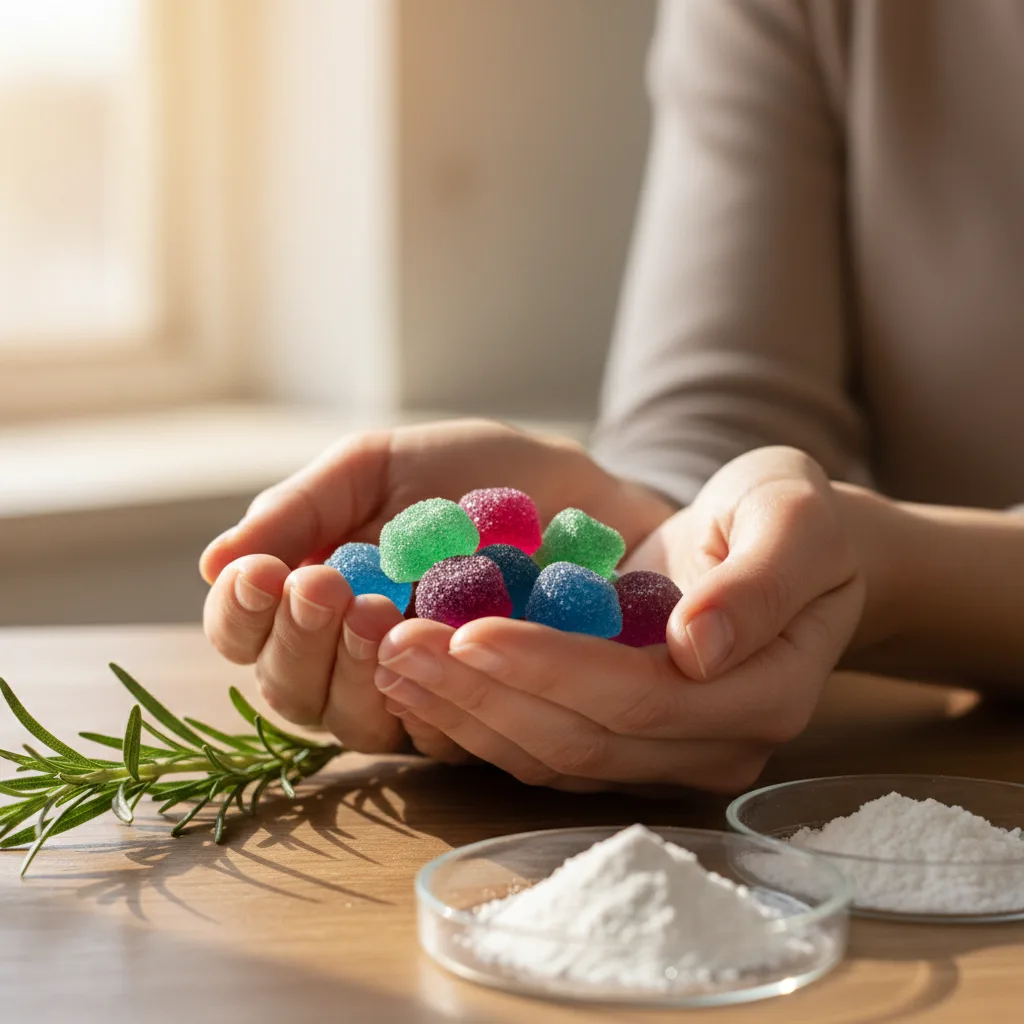
Delivery considerations for consistent hydration support
High-potency hyaluronic acid in a stable gummy format can maintain consistent daily intake. Formulation teams often pair it with antioxidants and humectant-friendly ingredients to support overall ingredient stability and sensory appeal, similar to approaches detailed in Top Adaptogens for Skin Vitality: Best Organic Botanicals & Bioactive Reviews 2026.
Biotin: Nutrient Support for Keratin-Based Structure
Biotin (vitamin B7) is commonly included to support keratin-related pathways that contribute to hair and nail strength and the integrity of keratinized tissues. Responsible formulation respects upper intake limits and offers calibrated serving sizes to suit different consumer profiles. Sugar-free gummy formats and clean excipients help maintain an attractive nutrition profile for mainstream audiences.
Targeted biotin formats for daily integration
High-dose options are available for targeted support, while maintenance formulations deliver lower, daily amounts suitable for long-term use. Label clarity and transparency about daily values are essential for consumer trust—a principle that aligns with recommendations in Analyzing Health Claims on Food Supplement Labels: Compliance, Consumer Understanding, and the Future of EU Regulation 2026.
Formulation & Delivery Innovations: Technology Meets Botanical Wisdom
Fiber-Based Sweetening: Taste with Prebiotic Benefits
Modern organic beauty gummies replace added sugars with plant-based prebiotic fibers that provide sweetness, texture, and a supportive substrate for ingredient delivery. These fibers align with lower-glycemic preferences and can contribute to digestive comfort. Choosing fiber sources with clean labels enhances product positioning for wellness-minded buyers, reflecting innovation seen in These 8 Beginner-Friendly Plants Can Cut Supplement Costs in 2026.
Botanical Synergy: Safe, Traceable Phytonutrients
Brands increasingly pair core actives with botanicals such as sea vegetables, bamboo-sourced silica, polyphenol-rich fruits, and citrus complexes. These botanicals are selected for their nutrient complements and sustainable sourcing profiles. Strict supplier audits and organic certifications help assure ingredient provenance and quality, echoing perspectives from Traditional Medicinal Plants for Men’s Health: Preservation, Bioactive Synergy, and 2026 Insights.
Adaptive Manufacturing and Stability Strategies
Advances in encapsulation, texture engineering, and moisture control enable manufacturers to preserve labile actives within gummy matrices. Adaptive manufacturing processes factor in global regulatory differences while prioritizing clean labels and minimal artificial additives—a practice also explored in Herbal Shampoo Market Trends, Sustainability, and Bioavailable Solutions for 2026 Growth.
Consumer Segmentation and Market Dynamics in 2026
Digital-Native Shoppers: Expecting Transparency and Personalization
Younger consumers often drive category growth, seeking products that combine sensory delight with verifiable ingredient stories. Social channels accelerate awareness and create demand for customizable supplement profiles. Retailers and formulators who emphasize traceability, sustainability, and science-informed claims are better positioned to engage these audiences. For detailed market reporting and supplier perspectives, explore this sector overview.
Cross-Demographic Appeal: From Early Adopters to Mature Consumers
Nutricosmetics are designed to serve a spectrum of needs, from targeted hair and nail support to broad nutritional maintenance. Product lines often offer tiered formulations to meet the preferences of different life stages, with dosing and actives tailored for each segment, as seen in the offerings discussed in Top Hair Growth Supplements for Fuller, Thicker Hair: The Best Organic Ingredient Guide for 2026.
Sourcing, Testing, and Sustainability Practices
Non-GMO and Organic Mandates: Baseline Expectations
Leading formulations meet organic and non-GMO criteria and prioritize suppliers that document seed-to-shelf traceability. Independent third-party testing for purity, heavy metals, and microbial limits is standard practice to uphold consumer safety and product claims. Comprehensive background on non-GMO verification can be found in Ashwagandha Bioengineering Breakthrough: Non-GMO Withanolide Production and Botanical Synergy 2026.
Packaging and Lifecycle Considerations
Eco-conscious packaging, recyclable materials, and reduced waste manufacturing practices are increasingly important purchase drivers. Sustainable design is evaluated through lifecycle assessments and vendor partnerships that demonstrate measurable impact reduction, as covered in Latin America Herbal Supplements Market Growth & Trends: Best Organic Insights for 2026.
How to Evaluate High-Quality Nutricosmetic Gummies
Transparent Labeling and Measurable Dosing
Look for clear ingredient lists, standardized active concentrations, and verified claims regarding organic status. Serving sizes and daily value information should be explicit, and third-party test results are a positive sign of manufacturing rigor, which aligns with the consumer advocacy in Best Practices for Safe Herbal Remedy Use: 2026 Insights for Clinicians and Wellness Seekers.
Sensory Experience and Adherence
Flavor development, texture, and portioning influence daily use. Gummies that balance enjoyable taste with clean ingredients encourage consistent intake and positive consumer experiences.

Practical Guidance for Retailers and Formulators
- Prioritize formulations that combine bioavailability with clean, organic certification and non-GMO verification.
- Require supplier documentation and third-party testing for each ingredient lot.
- Consider fiber-based sweetening systems and moisture-control packaging for shelf stability.
For an industry-focused perspective on product attributes and category growth, see this analysis.
Future Directions: Emerging Actives and Compositional Trends
R&D is exploring expanded actives such as marine-derived carotenoids, polyphenol complexes, and plant-sourced silica, while maintaining an emphasis on clean labels and sustainable sourcing. Ongoing research into synergistic combinations aims to refine ingredient pairings that support visible appearance and wellbeing when used as part of daily routines.
Key Takeaways for 2026: Quality, Transparency, and Consumer-Centric Design
Organic beauty gummies and nutricosmetics are now defined by ingredient integrity, transparent supply chains, and enjoyable formats that encourage adherence. Retailers and formulators who emphasize measurable dosing, third-party verification, and eco-conscious manufacturing will meet rising consumer expectations and support long-term market growth.
Contact channels and distributor relationships should highlight product specifications, testing data, and sustainability documentation when evaluating new portfolio additions.
Explore certified, science-informed organic beauty gummy formulations and prioritize products with transparent sourcing, standardized dosing, and third-party testing. Whether you are evaluating assortments for retail or refining a formulation pipeline, select non-GMO, sustainably sourced nutricosmetics that align with consumer expectations for quality and traceability.
FAQs
-
What are organic beauty gummies and why are they gaining popularity in 2026?
Organic beauty gummies are chewable supplements formulated with bioavailable nutrients and botanicals that support skin, hair, and nail appearance. They gain popularity because they combine convenience, enjoyable taste, and traceable organic sourcing, encouraging consistent daily use. This trend echoes the shift toward holistic products outlined in Emerging Beauty and Wellness Trends: The Ultimate 2026 Non-GMO, Sustainable Guide.
-
How do collagen peptides in gummies support appearance-related goals?
Hydrolyzed collagen peptides provide specific amino acids that contribute to connective tissue structure. In gummy formats, these peptides are processed for improved uptake and combined with palatable flavors and stabilizing excipients to encourage regular intake as part of a broader wellness routine. See more in Nourish Your Hair and Skin from Within: Discover the Benefits of Bamboo as a Natural Source of Collagen.
-
What role does hyaluronic acid play in nutricosmetic formulations?
Hyaluronic acid is included to support skin moisture retention and surface smoothness. Gummy delivery offers consistent daily dosing, and formulation strategies focus on stabilizing the ingredient while pairing it with complementary nutrients to support hydration-related appearance outcomes.
-
Is biotin safe to include in daily beauty gummy routines?
Biotin is commonly used to support keratin-associated structures for hair and nails. Safe inclusion depends on respecting established daily intake guidance and clear labeling. Consumers should select products with transparent dosing, as recommended in Analyzing Health Claims on Food Supplement Labels: Compliance, Consumer Understanding, and the Future of EU Regulation 2026. Consult healthcare advisors if there are specific medical concerns or other supplements are in use.
-
How do fiber-based sweeteners benefit gummy formulations?
Plant-based prebiotic fibers replace added sugars to provide texture, sweetness, and potential digestive benefits. These fibers align with lower-glycemic preferences and can support a cleaner ingredient profile, similar to recommendations in These 8 Beginner-Friendly Plants Can Cut Supplement Costs in 2026.
-
What should retailers require from suppliers regarding ingredient verification?
Retailers should request organic and non-GMO certifications, certificate of analysis (COA) for each lot, heavy metal and microbial testing, and documentation of manufacturing practices. Transparent supplier traceability and third-party testing build credibility and reduce supply-chain risk, as discussed in Can You Trust Vitamin and Supplement Labels? Truths for 2026 Shoppers.
-
Are botanical actives appropriate in beauty gummies, and how are they selected?
Botanical actives can complement core nutrients when chosen for stability, safety, and evidence of nutritional benefits. Suppliers select botanicals with documented provenance, organic sourcing where possible, and formulations that respect regulatory allowances and consumer label expectations, detailed in Traditional Medicinal Plants for Men’s Health: Preservation, Bioactive Synergy, and 2026 Insights.
-
How can formulators maximize ingredient stability in gummy matrices?
Formulators use moisture-control packaging, encapsulation, and stabilizing excipients to protect labile actives. They also optimize pH, select compatible flavor systems, and perform accelerated stability testing to ensure consistent potency through the product shelf life. Best practices can be found in Best Practices for Safe Herbal Remedy Use: 2026 Insights for Clinicians and Wellness Seekers.
-
What packaging practices support sustainability for nutricosmetics?
Sustainable packaging practices include recyclable or compostable materials, minimal plastic use, reduced secondary packaging, and supply-chain improvements to lower carbon footprint. Lifecycle assessments help quantify environmental benefits, as covered in Latin America Herbal Supplements Market Growth & Trends: Best Organic Insights for 2026.
-
How should consumers choose an organic beauty gummy among many options?
Consumers should evaluate ingredient transparency, organic and non-GMO certifications, third-party testing, declared active amounts, and sensory attributes like taste and texture. Prioritizing products with clear labeling and documented supply-chain practices supports informed purchasing. Learn more in Can You Trust Vitamin and Supplement Labels? Truths for 2026 Shoppers.