

Traditional Medicinal Plants for Men’s Health: Preservation, Bioactive Synergy, and 2026 Insights
Traditional medicinal plants for men’s health: preservation, bioactive synergy, and 2026 insights
Traditional medicinal plants for men’s health remain a critical bridge between cultural knowledge and modern scientific inquiry. These plant-based systems support healthy reproductive, urinary, and circulatory function while preserving ecological knowledge. In South Africa and beyond, communities steward species that provide nutritional and phytochemical resources, and this article outlines evidence-informed preparation, conservation priorities, and quality practices for ethically integrating traditional botanicals into contemporary wellness strategies. For additional context and community perspectives, see this field review: Traditional medicinal plants offer hope for men’s health.
Why these plants matter to communities and scientists
Ethnobotanical knowledge captures generations of observation about plants and local health practices. It is a repository of practical techniques for preparing botanicals, local ecological management, and culturally specific wellness priorities. Documenting these practices supports biodiversity and provides researchers with hypotheses about phytochemical synergies worth investigating.
Communities often couple dietary, ritual, and topical uses with best practices for safe herbal remedy use that aim to maintain resilient physical and social function. Protecting this knowledge bolsters cultural continuity and creates opportunities for community-led stewardship and economic participation in ethical botanical markets.
Documented patterns: species diversity, use cases, and regional distribution
Longitudinal surveys across provinces have cataloged hundreds of species used in men’s wellness protocols. Usage clusters commonly focus on circulation, reproductive function support, and urinary comfort. Many plants are prepared as decoctions, infusions, or poultices, depending on the intended route of administration.
This diversity underscores the need for conservation and sustainable harvest, because local ecosystems supply the raw materials that underpin traditional practices and culinary uses alike.
Core plants and evidence-focused profiles
African potato: sterols, norlignans, and traditional preparations
African potato corms contain sterol-like compounds and other phytochemicals that have attracted scientific interest. Laboratory and animal research explores how these constituents influence cellular pathways associated with healthy hormonal signaling and antioxidant activity. Current findings are hypothesis-generating and warrant further controlled human studies.
Traditional extraction methods include boiling corms to create decoctions or pulverizing dried material for oral administration. Practitioners vary solvent choice and temperature to favor specific compound classes; these choices influence extract composition and bioavailability. To understand how bioavailability trends influence contemporary uses of botanicals, explore Black Seed Oil Market Insights, Bioavailability Trends & Organic Demand 2026.
Elephant root: flavonoids, saponins, and multi-component activity
Elephant root roots are rich in flavonoids, tannins, saponins, and triterpenoids. These compounds are often studied for their antioxidant properties and potential to support circulatory function and cellular resilience. Researchers emphasize that complex mixtures can work differently than isolated compounds, which is why synergies are an active area of study.
Traditional use favors controlled decoction to concentrate polar constituents. Modern extraction science seeks to replicate beneficial profiles while ensuring gentle processing to preserve labile compounds. Research on AI-powered natural product discovery is advancing the understanding of bioactive synergy in plant medicine.
Papaya: seeds and leaves as nutrient- and enzyme-rich components
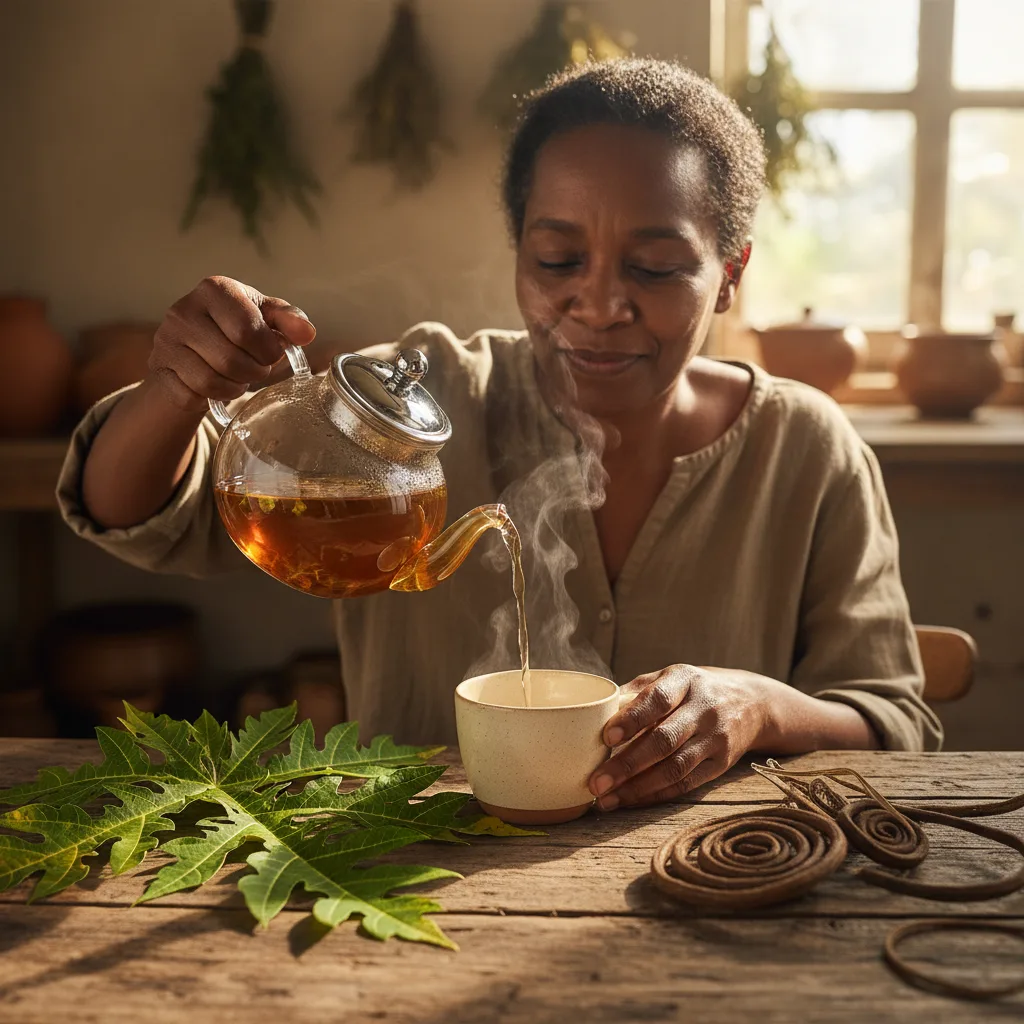
Papaya seeds and leaves contain proteolytic enzymes such as papain, a range of phenolic compounds, and plant sterols. In traditional practice, these parts are prepared as infusions or decoctions to leverage their nutrient density and enzyme activity. Contemporary phytochemical work examines how these constituents contribute to general wellness and systemic balance. To uncover more about processing and wellness benefits, see From-seed-to-sip-harnessing-the-power-of-papaya-seed-and-leaf-in-your-smoothie-or-juice-for-optimal-health.
Careful handling and processing—from harvest timing to extraction—affect the enzyme activity and overall composition of papaya-derived preparations.
Preparation and bioavailability: maximizing safe extraction
Extraction variables dramatically influence the profile and bioavailability of botanical preparations. Factors include harvest stage, drying protocol, particle size, solvent selection, temperature, and extraction time. Small adjustments can increase or decrease the yield of target compounds.
Best-practice options in community and small-scale settings emphasize food-grade solvents, low-heat or gentle-water extraction to preserve sensitive molecules, and standard operating steps that reduce contamination risk. Chemical fingerprinting and batch records help track consistency when scaling from local preparations to larger production runs. Insights on optimizing bioavailability for various botanicals can be found in Emerging Beauty and Wellness Trends: The Ultimate 2026 Non-GMO, Sustainable Guide.
Conservation and ethical stewardship
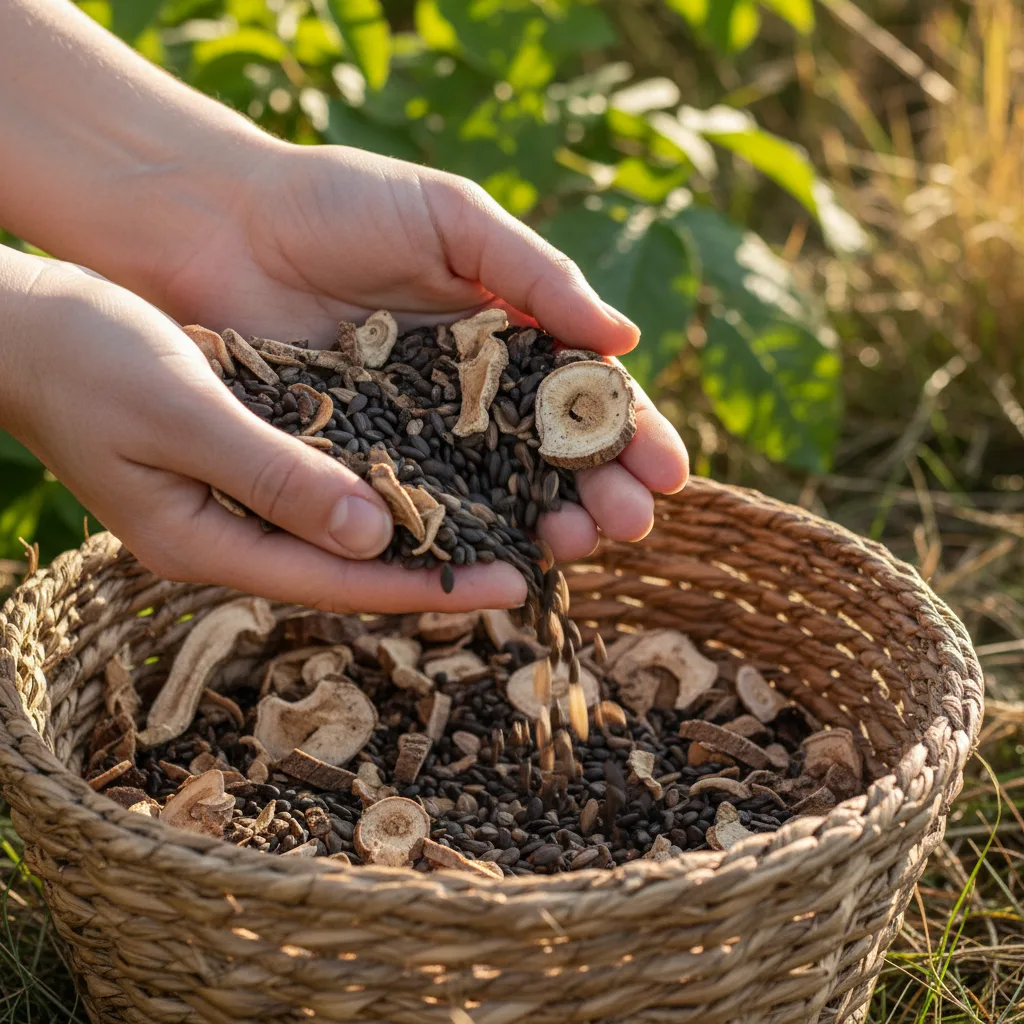
Sustainable harvesting and community cultivation are central to preserving both biodiversity and cultural heritage. Overharvesting wild populations threatens plant availability and ecosystem balance. Community-led nurseries, seed banks, and rotational harvest strategies help restore wild stocks and provide income opportunities.
Protection of indigenous intellectual property is equally important. Ethical frameworks ensure communities that share knowledge receive recognition and benefit-sharing when their practices inform research, commercialization, or conservation projects. Explore the role of Preserving Navajo Plant Knowledge: Traditional Healing, Organic Practices, and 2026 Herbal Insights for a global perspective on stewardship.
Research pathways, limitations, and validation
Interdisciplinary collaborations unite ethnobotanists, phytochemists, ecologists, and community knowledge holders to prioritize candidate species for study. Preclinical models can suggest mechanisms, but high-quality human research is necessary to confirm safety profiles, dosing approaches, and appropriate uses.
Researchers must also be cautious about extrapolating animal data to humans and avoid overstating benefits. Transparent reporting, rigorous methodology, and community consent are essential for meaningful, ethical outcomes. Learn more about the potential and risks through 7 ‘Natural’ Supplements That Can Affect Liver and Kidney Health: Non-GMO Safety Guide 2026.
Quality assurance: traceability and analytical validation
Quality assurance begins at harvest. Traceable supply chains document origin, cultivar, harvest date, and processing. Analytical methods such as HPLC, GC-MS, and spectrophotometry create chemical fingerprints used for batch-to-batch consistency.
Non-GMO verification, organic certification where applicable, and contaminant testing (heavy metals, mycotoxins, pesticide residues) are part of a modern quality system. These steps protect consumers and support responsible market access. Insightful reviews on Can You Trust Vitamin and Supplement Labels? Truths for 2026 Shoppers address transparency concerns in the market.
Practical guidance for integration: community, industry, and policy actions
- Support community-led cultivation programs to reduce pressure on wild populations and broaden local economic opportunity.
- Develop shared benefit agreements that recognize traditional knowledge and provide fair compensation when it informs research or products.
- Invest in scalable, low-impact processing technologies that preserve bioactive profiles and minimize environmental footprint.
For additional field notes and community perspectives, consult this review of ethnobotanical practice.
Responsible innovation: balancing heritage, science, and market expectations
Responsible integration of traditional medicinal plants for men’s health requires humility and rigorous methods. Market transparency and ethical sourcing drive consumer trust. At the same time, respectful research partnerships can generate actionable data that benefits communities and informs safer, more effective preparation practices.
By centering conservation, community rights, and evidence-informed processing, stakeholders can help ensure these plant traditions remain accessible, sustainable, and meaningful for future generations.
Practical checklist for practitioners and buyers
- Verify origin and traceability for harvested botanicals.
- Favor low-heat, food-grade extraction methods when seeking to preserve labile compounds.
- Look for chemical fingerprint data and contaminant testing on scaled botanical lots.
- Prioritize partnerships that include benefit-sharing and intellectual property protections for knowledge holders.
This evidence-informed approach supports culturally grounded use of traditional medicinal plants for men’s health while advancing sustainability and scientific transparency.
For further field-based perspectives and ongoing updates on community work, visit Traditional medicinal plants offer hope for men’s health.
Prioritize botanicals with documented traceability, analytical validation, and ethical sourcing agreements. Whether you are a distributor, retailer, or informed consumer, choose ingredients grown and processed under sustainable practices that respect community knowledge and demonstrate consistent quality.
Frequently asked questions
-
Which species are most commonly referenced in South African traditional practice for men’s wellness?
Commonly referenced species include Hypoxis hemerocallidea (African potato), Entada elephantina (elephant root), and Carica papaya (papaya). These plants are traditionally used in preparations intended to support reproductive, urinary, and circulatory function and have been the subject of ethnobotanical and preclinical phytochemical research. Find broader context in African Heritage Diets and Traditional Plant Medicine: Modern Wellness Revolution 2026.
-
How do traditional preparation methods influence the bioavailability of plant compounds?
Preparation methods—such as boiling (decoction), infusion, or cold-water extraction—affect which phytochemicals are extracted and their stability. Low-heat and food-grade solvents tend to preserve heat-sensitive compounds, while longer decoctions may concentrate polar constituents. Proper processing improves bioavailability and consistency. For more details, check Herbal Tea: Best Organic Rituals and Bioavailable Benefits for 2026.
-
What are key conservation actions to preserve medicinal plant populations?
Key actions include community-led cultivation, reseeding programs, seed banking, and rotational harvesting. These measures reduce pressure on wild populations, support genetic diversity, and create local livelihoods while ensuring sustainable supply for future use. For further reading, see Exploring Six Centuries of Herbal Wisdom: The Roots of Healing for 2026.
-
Why is traceability important when sourcing botanical ingredients?
Traceability documents the plant origin, harvest conditions, and processing history, which supports quality control and consumer confidence. It enables testing for contaminants, verifies non-GMO claims where relevant, and helps honor source communities through transparent supply chains. More consumer insights can be found in Can You Trust Vitamin and Supplement Labels? Truths for 2026 Shoppers.
-
What analytical tests help ensure botanical quality and consistency?
Analytical tests include HPLC and GC-MS for chemical fingerprinting, spectrophotometry for marker compounds, and laboratory assays for contaminants such as heavy metals, pesticides, and mycotoxins. These tests establish batch-to-batch consistency and safety benchmarks. This is highlighted in Herbal Beauty Products Market Trends: Bioavailable, Organic, and Sustainable Solutions 2026.
-
How can communities retain rights when their traditional knowledge informs research or products?
Communities can enter benefit-sharing agreements, retain intellectual property rights through formal recognition, and participate in decision-making. Ethical research protocols and free, prior, and informed consent are essential to equitable collaboration. Learn more in Preserving Navajo Plant Knowledge: Traditional Healing, Organic Practices, and 2026 Herbal Insights.
-
What limitations exist in the current scientific evidence for traditional plant uses?
Many studies remain preclinical or observational, often relying on animal models or lab assays. Human clinical trials are limited for most species, so findings should be treated as preliminary. High-quality randomized studies are needed to clarify safety, dose, and efficacy for specific uses. See 7 ‘Natural’ Supplements That Can Affect Liver and Kidney Health: Non-GMO Safety Guide 2026 for further analysis.
-
How do sustainable certifications impact consumer trust in botanicals?
Sustainable certifications—paired with traceability and transparent analytics—signal adherence to environmental and social standards. Consumers increasingly look for documentation of ethical sourcing, non-GMO status, and third-party testing when assessing botanical products. For trends, review Herbal Beauty Products Market Trends: Bioavailable, Organic, and Sustainable Solutions 2026.
-
What processing practices minimize loss of heat-sensitive phytochemicals?
Cold extraction techniques, gentle-water infusions, short-duration low-heat decoctions, and rapid drying methods help preserve heat-sensitive compounds. Controlling particle size and avoiding prolonged exposure to high temperatures also reduces degradation. Insights are available in Winter Comfort Foods for Radiant Skin: Best Organic Nutrition Strategies 2026.
-
How can buyers evaluate whether botanical sourcing respects indigenous knowledge?
Buyers should request documented benefit-sharing agreements, evidence of community engagement, and transparency about how traditional knowledge was obtained. Third-party audits and partnerships with recognized stewardship programs can further validate ethical sourcing practices. For a comprehensive view, refer to Preserving Navajo Plant Knowledge: Traditional Healing, Organic Practices, and 2026 Herbal Insights.