
Synergistic Herbal Compounds for Neuroregeneration: Advancing Spinal Cord Recovery With Ancient Chinese Medicine 2026
Synergistic Herbal Compounds: A Science-Forward View on Supporting Spinal Cord Recovery
The concept of synergistic herbal compounds sits at the intersection of traditional botanical practice and contemporary preclinical science. In this article the phrase “synergistic herbal compounds” refers to paired plant-derived constituents—such as luteolin and astragaloside IV—investigated for their combined effects on biological pathways relevant to spinal cord recovery. Research in 2026 emphasizes sustainable sourcing, validated extraction, and careful translational steps from lab models to human research.
Research approaches increasingly combine ecological stewardship with rigorous analytical validation to ensure reproducible active levels and to reduce variability introduced by raw-material sourcing.
Why Multi-Compound Botanical Strategies Matter for Nervous System Resilience
Single-ingredient approaches often address a narrow biological target. By contrast, synergistic herbal compounds can influence multiple pathways simultaneously, potentially providing broader support for neural stability after injury. This multi-target logic aligns with the complex biology of neural tissue, where immune activity, oxidative balance, and structural maintenance interact continuously.
Recent insights around top adaptogens for skin vitality highlight similar multi-pathway support for cellular health, paralleling innovations seen in neuroregenerative approaches.
The Immediate Post-Injury Environment: Oxidative and Immune Factors
Following trauma to spinal tissue, oxidative stress and neuroimmune activity create a challenging environment for cellular recovery. Preclinical studies suggest that moderating these simultaneous processes can promote a more stable microenvironment. Synergistic herbal compounds are being evaluated for balanced support across these intersecting mechanisms.
Studies on 7 ‘Natural’ Supplements That Can Affect Liver and Kidney Health also stress the importance of a balanced approach and safety when using botanicals.
Moderation and careful formulation reduce the risk of off-target effects while preserving intended activity.
Spotlight on luteolin and astragaloside IV: Why These Compounds Are Studied Together
Luteolin and astragaloside IV have emerged in research as complementary botanical constituents. Luteolin is a flavonoid found in several edible flowers and herbs. Astragaloside IV is a saponin derived from astragalus root in classical Chinese herbal systems. Together, they represent a model pairing for how herbal constituents might act in concert to influence cellular signaling, oxidative balance, and tissue maintenance.
Luteolin: Modulating Inflammatory Signals and Oxidative Balance
Luteolin is studied for its capacity to influence inflammatory signaling cascades and oxidative markers in laboratory models. Researchers examine extraction methods that preserve luteolin’s integrity to enhance oral or topical bioavailability. These efforts prioritize sustainability and non-GMO cultivation to meet modern quality expectations.
In the landscape of herbal sourcing, examining trends such as the rising demand for herbal beauty products reinforces the importance of purity and sustainability in production.
Extraction and Formulation Considerations for luteolin
Advanced extraction techniques—such as supercritical CO2 and solvent-free processes—aim to preserve flavonoid profiles and reduce impurities. Formulation strategies often focus on enhancing uptake while ensuring consistent active levels through standardized testing.
Guidance such as Best Practices for Safe Herbal Remedy Use guide manufacturers and consumers to evaluate formulation quality and safety when considering such botanical solutions.
Astragaloside IV: Supporting Cellular Stability and Structural Integrity
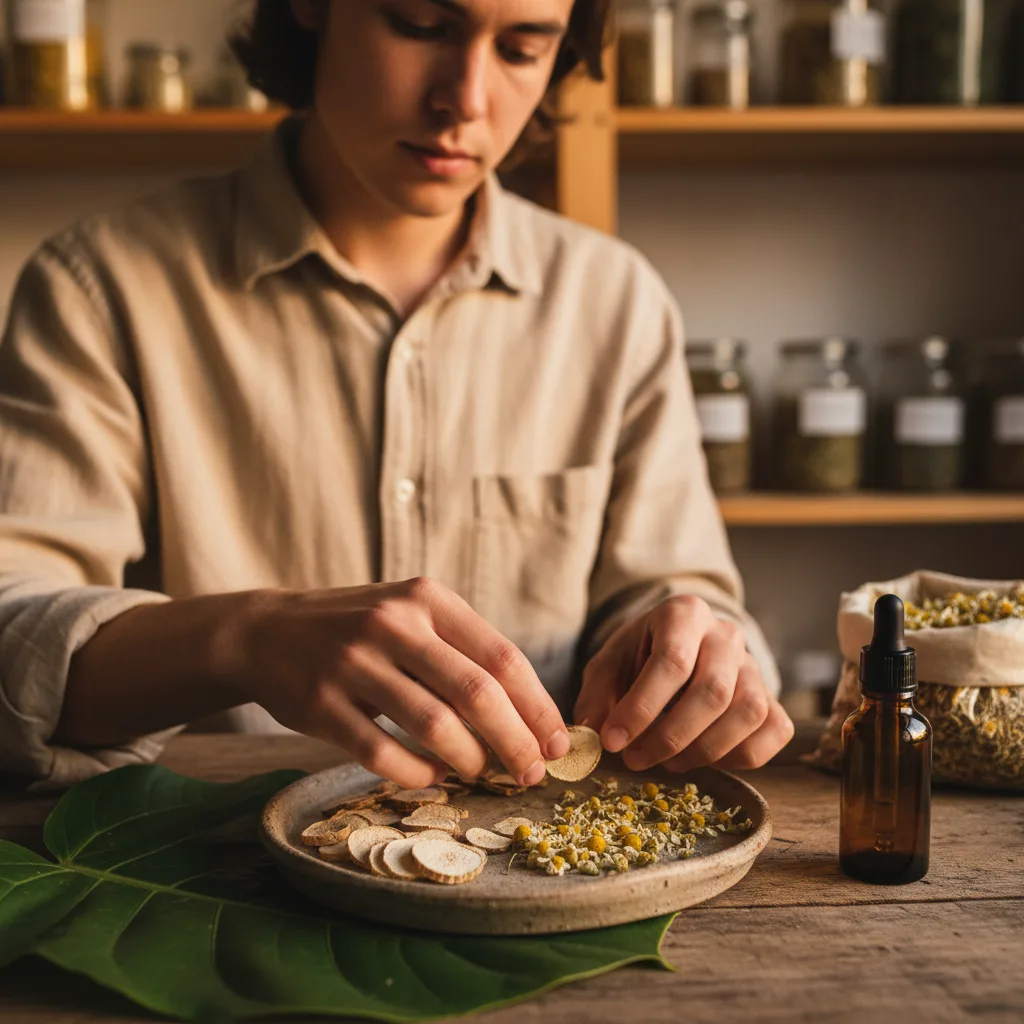
Astragaloside IV, obtained from astragalus root grown under controlled conditions, is evaluated for effects on cellular resilience and extracellular matrix interactions in preclinical models. Researchers emphasize environmentally mindful purification methods, including enzyme-assisted and water-based extraction, to maintain sustainability standards.
Quality Control for Astragaloside IV Sourcing
Sourcing frameworks include organic cultivation, soil and water testing, and batch-level verification of active constituents. High-performance liquid chromatography (HPLC) and orthogonal assays help certify the composition and reduce variability across lots.
Analyzing Health Claims on Food Supplement Labels can help consumers discern which products meet these high standards in the evolving supplement market.
Mechanistic Rationale: How Complementary Botanicals May Support Regenerative Contexts
The rationale for combining luteolin and astragaloside IV involves targeting overlapping and complementary pathways. Luteolin addresses reactive oxygen species and inflammation-related signaling. Astragaloside IV may influence cellular stress responses and structural maintenance. In combination, the two constituents are hypothesized to promote a biochemical milieu conducive to cellular survival and network preservation.
Preclinical studies provide mechanistic hypotheses that inform which outcomes to measure in translational research.
Evidence from Preclinical Models: Cautious Interpretation
Preclinical reports indicate decreased markers of oxidative damage and modified inflammatory signaling when paired compounds are used in lab settings. Some animal-model studies show improvements in tissue preservation and functional metrics within controlled experimental designs. These findings are hypothesis-generating and inform the design of further translational research rather than establishing human efficacy.
Investigators emphasize reproducibility, transparent methodology, and clear limitations when interpreting these results.
Broader herbal wisdom, such as that explored in Preserving Navajo Plant Knowledge, supports a nuanced, evidence-based view of plant-based medicine.
Structural and Functional Outcomes Observed in Lab Studies
Laboratory observations often assess nerve fiber integrity, scar tissue deposition, and coordinated behaviors in animal subjects. Paired botanical constituents have been associated with preservation of neural structures and with changes in cellular markers tied to repair processes. Investigators stress that outcomes in animal models do not directly predict human responses and require careful clinical investigation.
Preserving neural architecture is a step toward maintaining functional capacity, but it is only one component of a broader recovery framework. Researchers prioritize replicable laboratory results, transparent methodology, and stepwise translational work to determine clinical relevance.
Sourcing, Sustainability, and Good Manufacturing Practices
Quality and traceability are essential when evaluating any botanical intervention. Ethical sourcing, organic cultivation, and transparent supply chains reduce environmental impact and improve product reproducibility. Independent verification of active compound concentrations and batch tracking are critical quality control elements.
The future directions mirrored in AI-Powered Natural Product Discovery could enable even more efficient identification of effective synergistic compounds.
Extraction Technology and Environmental Stewardship
Modern extraction technology focuses on environmental stewardship while maximizing compound stability. Water-based, enzyme-assisted, and supercritical CO2 methods reduce the use of harsh solvents. Low-temperature drying and careful handling preserve sensitive flavonoids and saponins for downstream formulation.
From Lab to Clinic: Responsible Pathways for Research and Application
The research roadmap includes expanded preclinical validation, safety assessment, and phased human research. Investigators recommend that dosing strategies, delivery systems, and potential interactions be evaluated in controlled studies. Ongoing dialogue with regulatory bodies and independent research ethics oversight are also important.
Can You Trust Vitamin and Supplement Labels? asks critical questions about supplement reliability for researchers and consumers embarking on this translational pathway.
Safety, Interactions, and Clinical Caution
Herbal constituents can interact with prescription agents or have dose-dependent effects. Safety assessments in human populations are necessary to characterize tolerability profiles. Consumers and practitioners should consult qualified health professionals before initiating any botanical regimen, particularly in contexts of concurrent medication use.
Practical Guidance for Researchers and Manufacturers
For researchers, rigorous experimental design, transparent reporting, and replication are essential. For manufacturers, prioritizing certified sourcing, validated extraction methods, and third-party testing strengthens consumer confidence. Both stakeholders should avoid extrapolating directly from preclinical models to claims about human outcomes.
Looking Ahead: Research Priorities and Translational Challenges
Key research priorities include dose–response characterization, optimization of delivery methods, long-term safety studies, and randomized human trials where ethically and practically feasible. Cross-disciplinary collaborations between botanists, pharmacologists, and rehabilitation specialists will accelerate meaningful progress.
For a deeper summary of recent investigative reporting and mechanistic diagrams, consult the detailed science overview.

Practical Summary: Responsible Use of Synergistic Herbal Compounds
Synergistic herbal compounds represent a promising area of preclinical research for supporting aspects of spinal cord recovery. Emphasis on sustainability, validated extraction, and rigorous translational research will be essential. Stakeholders should interpret current evidence cautiously and prioritize human safety and data transparency in moving forward.
Closing Perspective: Integration Without Overstatement
Integrating classical herbal knowledge with contemporary science offers productive pathways for discovery. However, claims must remain evidence-led, and communication should avoid overstatement. Continued research, ethical sourcing, and exacting quality control will define the next steps for synergistic herbal compounds in neuroregenerative research.
Prioritize evidence-led sourcing and manufacturing when exploring plant-based support for neural resilience. Favor transparent supply chains, validated extraction methods, and independent testing. Consult qualified health professionals before integrating botanical protocols, especially when other therapies are in use.
FAQs
-
What are synergistic herbal compounds and why are they of interest for spinal cord recovery?
Synergistic herbal compounds refer to pairs or combinations of plant-derived constituents studied for complementary effects on biological pathways. For spinal cord recovery, they are of interest because they may influence inflammation, oxidative balance, and structural maintenance simultaneously, offering a multi-pathway approach to stabilizing the injury microenvironment in preclinical settings. For more on broader herbal strategies, see AI-Powered Natural Product Discovery.
-
How do luteolin and astragaloside IV function together in laboratory studies?
In preclinical models luteolin primarily targets oxidative markers and inflammatory signaling, while astragaloside IV is evaluated for cellular resilience and extracellular matrix effects. Combined, they are studied for complementary impacts on tissue preservation and biochemical stability, though human clinical validation remains a necessary next step.
-
Are the findings from animal studies directly applicable to people?
No. Animal-model outcomes inform mechanistic understanding and hypothesis generation but do not establish human efficacy. Translational research, including controlled human studies and safety assessments, is required before drawing conclusions about clinical benefits in people. A good overview of these translation challenges is provided in the detailed science overview.
-
What should consumers look for when assessing botanical products that claim neuro-supportive effects?
Consumers should prioritize transparent sourcing, organic cultivation where available, third-party testing for active components, and clear manufacturing records. Avoid products that make definitive health claims beyond the evidence and consult qualified health professionals when combining botanicals with other therapies. For understanding label reliability, read Can You Trust Vitamin and Supplement Labels?.
-
How important is extraction method for botanical compound quality?
Extraction significantly impacts compound purity and stability. Water-based, enzyme-assisted, and supercritical CO2 approaches can reduce solvent residues and preserve sensitive constituents. Standardization and analytical testing (e.g., HPLC) are crucial for consistent product profiles. You may also be interested in Herbal Beauty Products Market Trends, which covers broader extraction quality concerns.
-
What safety considerations apply to paired botanical formulations?
Safety considerations include potential interactions with medications, dose-dependent effects, and individual tolerability. Comprehensive safety profiling in human populations is necessary. Practitioners should monitor for adverse events and advise patients to disclose all concurrent therapies. See Best Practices for Safe Herbal Remedy Use for more.
-
How do sustainability and ethical sourcing factor into product quality?
Sustainable agricultural practices, organic certification, and traceable supply chains reduce contamination risks and environmental impact. Ethical sourcing supports biodiversity and consistent raw-material quality, which enhances reproducibility and consumer trust in botanical research and products.
-
What are the next research priorities to advance these botanical strategies?
Key priorities include rigorous dose–response studies, standardized extraction and formulation methods, safety trials in humans, and randomized controlled translational research. Interdisciplinary collaboration and transparent reporting will accelerate reliable assessment of potential benefits. See Preserving Navajo Plant Knowledge for an example of integration across traditions.