


Safeguarding Wellness: Avoiding Mislabeled Herbal Supplements in 2026
Unmasking Mislabeled Herbal Supplements: Practical Steps for Safer Botanical Choices
Consumers looking for botanical support increasingly face the problem of mislabeled herbal supplements. In 2026, awareness about mislabeled herbal supplements is essential for anyone who prioritizes ingredient transparency and sustainable sourcing.
Market reports and state advisories have highlighted instances where products marketed as botanical supplements contained unauthorized synthetic additives. These developments underline why mastering supply-chain resilience and transparency matters for safety.
Independent verification and traceable sourcing empower buyers to avoid problematic products and make better decisions when selecting botanicals for health and well-being.
How to Spot Potentially Mislabeled Supplements Before You Buy
Understanding how to identify potential mismatches between label and content empowers shoppers to make informed purchases. Look for visible indicators on packaging and verify documentation before committing to a purchase.
Key on-package cues include thorough ingredient lists, batch numbers, and accessible contact information for the manufacturer or supplier. Absent or vague details are red flags indicating possible gray-market risks or lack of proper supplement supply chain integrity.
For additional context on recent enforcement actions and advisories, review the state bulletin available via the Ohio advisory on mislabeled herbal supplements. This bulletin describes observed supply-chain issues and enforcement responses.
What Accurate Labeling Looks Like and Why It Matters
Accurate labeling is the foundation of informed botanical purchasing. Labels should state botanical names, part of the plant used, extraction method (if applicable), country of origin, and any certifications such as organic or third-party quality checks.
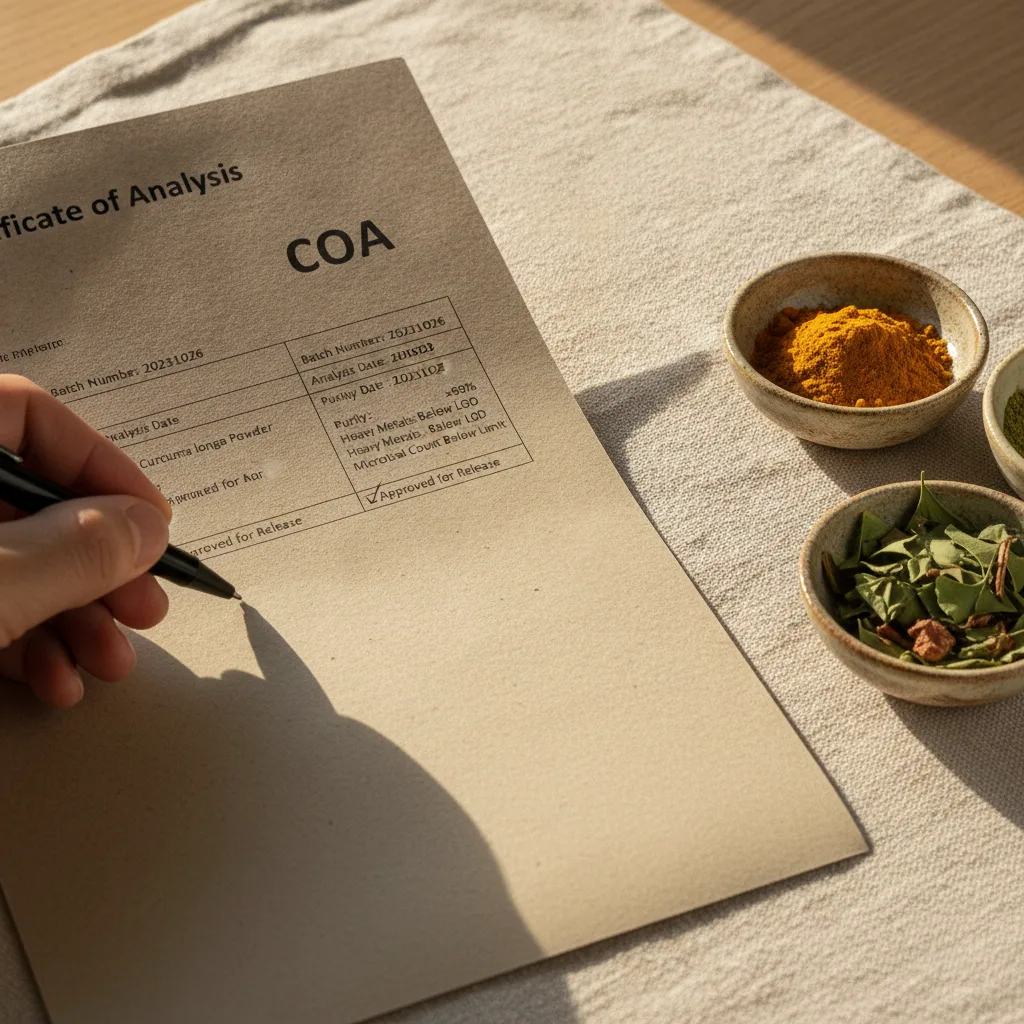
A trustworthy product will provide a clear path to a Certificate of Analysis (COA) or batch-specific testing results. COAs allow consumers to verify that the product contains what the label lists and that unwanted synthetic additives are absent. If you’re seeking additional guidance on herbs with validated composition, Herbal Medicinal Products Market Outlook 2026 explores demand and best practices for label transparency.
Why Third-Party Testing Should Influence Your Decision
Independent laboratories that follow recognized accreditation standards use analytical methods like high-performance liquid chromatography (HPLC) and mass spectrometry to authenticate botanical profiles.
Third-party test results should be accessible online or available upon request. These results show the presence and concentration of target botanicals and screen for contaminants or undeclared substances, a process further detailed in Personalized Vitamins, Minerals, and Supplements Market Outlook 2026.
Cat’s Claw Authenticity: Practical Guidance
Cat’s claw (Uncaria tomentosa) is a plant with a long history of traditional use. When purchasing cat’s claw supplements, ensure product labels and COAs reference scientific names, batch numbers, and clear sourcing details. To make an informed choice, consulting Understanding Cat’s Claw and Gray Market Supplements: Ohio’s 2026 Guide to Safe Herbal Use gives essential state-specific insights.
Instances have been reported where products sold as cat’s claw contained unauthorized additives. Consumers should verify test results that confirm botanical identity and absence of synthetic analogs.

For more detail on recent regulatory notices, consult this public advisory: Ohio bulletin on mislabeled herbal supplements.
Common Red Flags Associated With Gray-Market Supplements
Products sold in unconventional retail venues such as convenience stores and some specialty shops may lack supply-chain transparency. Packaging that emphasizes novelty over substance can indicate elevated risk of mislabeling. Further discussion on herbal market dynamics and risk points is covered in Non-Regulated Drugs Market Outlook 2026–2035.
Other warning signs include missing batch numbers, lack of an accessible COA, or marketing language that implies broad, non-specific benefits without referencing evidence or sourcing.
Practical Checklist: Verifying Botanical Integrity at the Point of Purchase
- Confirm the botanical’s scientific name and plant part on the label.
- Ask for a batch-specific COA or a link to testing documentation.
- Verify organic, non-GMO, and sustainability claims with recognized certification references—a consideration explored in Utah Herbal Supplement Safety: Key 2026 Insights for Non-GMO and Organic Use.
- Prefer retailers with documented supplier-vetting processes.
These steps reduce the likelihood of buying mislabeled herbal supplements and increase confidence in product quality. Additionally, global perspectives on traditional medicine safeguards are detailed in Unlocking Africa’s Herbal Heritage: Best Non-GMO Traditional Medicine Insights 2026.
Why Supply-Chain Traceability Reduces Risk
Traceability links raw material origin to finished product, outlining growers, harvest dates, and processing steps. This transparency helps spot batch anomalies and potential contamination points, strengthening the approach detailed in Mastering Supplement Supply Chains: Strategies for Resilience and Expansion in 2026.
Suppliers who can trace materials from seed to shelf make it easier for retailers and consumers to demand accountability and for laboratories to compare botanical fingerprints against expected profiles.
Modern Testing Techniques That Detect Unauthorized Additives
Analytical tools like mass spectrometry and HPLC provide molecular-level identification of botanicals and can separate plant-derived compounds from synthetic analogs. These advanced methods are increasingly utilized in top adaptogen assessments, as discussed in Top Adaptogens for Skin Vitality.
When laboratories publish methods alongside COAs, reviewers can better understand how authenticity was assessed and whether the tests are fit for purpose.
Retailer Responsibilities and Regulatory Trends
Retailers are increasingly expected to vet suppliers, request batch-specific testing, and maintain records that demonstrate compliance with labeling requirements. Integrating best practices from Transforming Integrative Health Education may further support regulatory compliance.
State and federal advisories emphasize removal of non-compliant products and clearer industry-wide standards for ingredient disclosure and testing protocols.
Practical Strategies for Consumers to Reduce Exposure
- Prioritize purchases from retailers with transparent sourcing and supplier verification, adopting principles discussed in Personalized Health Agents and Multimodal AI.
- Request COAs and check that those COAs match the batch number on the product.
- Avoid impulse buys of unfamiliar brands in non-specialty venues.
- Favor products that publish methodological details about their testing partners.
Sustainability and Quality: Why Both Matter
Sustainable sourcing and regenerative agriculture practices can reduce contamination risk and support consistent botanical profiles over time. Asima Chatterjee’s pioneering plant science work—highlighted in Asima Chatterjee: Pioneering Indian Woman Phytochemist—shows how scientific rigor supports sustainability.
Suppliers who disclose farming methods, harvesting windows, and post-harvest processing steps provide added assurance to conscientious buyers.
Building a Culture of Accountability in the Botanical Marketplace
Consumers, retailers, and laboratories all play roles in strengthening market integrity. By demanding transparent information, insisting on third-party verification, and favoring traceable supply chains, stakeholders collectively reduce the incidence of mislabeled herbal supplements.
Proactive consumers can monitor official advisories and industry updates—such as the Ohio advisory on mislabeled herbal supplements—to stay informed about emerging risks and best practices.
Next Steps for Savvy Shoppers
Before purchasing, verify labeling details and request batch-specific testing information if it is not published. Keep records of COAs for products you buy regularly. For broader context, consult Herbal Medicinal Products Market Outlook 2026.
When in doubt, consult neutral informational resources and state advisories. The Ohio advisory is a practical illustration of how enforcement notices can help consumers identify problematic products. By using these approaches, you can significantly reduce the chance of purchasing mislabeled herbal supplements and better support product quality, sustainability, and transparency.
Prioritize supplements with traceable sourcing, batch-specific COAs, and accessible third-party test results. When shopping, ask questions, verify documentation, and favor retailers who commit to transparency and sustainable sourcing to support safer botanical choices.
FAQs
-
How can I verify a supplement labeled as cat’s claw is authentic?
Request a batch-specific Certificate of Analysis (COA) and confirm the botanical’s scientific name (Uncaria tomentosa) on the label. Check that laboratory methods used are appropriate for botanical authentication, and prefer suppliers that provide harvest origin and traceability documentation to ensure authenticity. Additional tips are provided in Understanding Cat’s Claw and Gray Market Supplements. -
What should I look for on a label to avoid mislabeled herbal supplements?
Look for the botanical’s scientific name, plant part used, batch number, country of origin, and clear contact details. Labels that reference third-party testing or include QR codes linking to COAs improve transparency and reduce the risk of mislabeling. You may also consult Utah Herbal Supplement Safety for more label safety criteria. -
Why is a Certificate of Analysis (COA) important when buying botanicals?
A COA shows laboratory confirmation of a product’s contents for a specific batch, including identity testing and contaminant screening. It helps confirm that the label matches the product and that unauthorized synthetic additives are not present. Refer to Personalized Vitamins, Minerals, and Supplements Market Outlook 2026 for additional information about batch verification. -
Are products sold at convenience stores more likely to be mislabeled?
Products sold at unconventional retail locations can lack supply-chain transparency and rigorous supplier vetting. That raises the risk of mislabeling. Prioritize purchases from established retailers who document their sourcing and testing practices as explored in Non-Regulated Drugs Market Outlook 2026–2035. -
How do third-party labs test for adulteration in herbal supplements?
Third-party labs use techniques such as high-performance liquid chromatography (HPLC) and mass spectrometry to identify botanical signatures and detect non-plant synthetic compounds. Accredited labs follow validated methods to ensure reliable results, as discussed in Top Adaptogens for Skin Vitality. -
What are practical steps retailers should take to minimize risk?
Retailers should vet suppliers, require batch-specific COAs, maintain purchase records, and avoid stocking products lacking verifiable testing. Establishing supplier-auditing procedures and insisting on traceability reduces exposure to mislabeled products. See Mastering Supplement Supply Chains for actionable strategies. -
Can organic or non-GMO claims guarantee a product is not mislabeled?
While organic and non-GMO certifications add credibility, they do not alone guarantee full authenticity. Combine certification checks with accessible COAs, supplier traceability, and third-party testing to improve assurance. For non-GMO strategies, see Unlocking Africa’s Herbal Heritage. -
How often should consumers check for updates on adulteration advisories?
Check official consumer advisories and industry updates periodically, especially if you regularly use botanical supplements. Regulatory notices may highlight emergent threats and inform safer purchasing choices. -
What role does supply-chain transparency play in preventing mislabeled supplements?
Traceability links raw materials to finished products and helps identify contamination points. Suppliers that document harvest, processing, and shipping steps enable quicker detection of anomalies and improve accountability. More on this can be found in Mastering Supplement Supply Chains. -
If a product lacks visible testing information, what should I do?
Ask the retailer or supplier for a batch-specific COA and inquire about the laboratory’s accreditation. If the information cannot be provided or verified, consider choosing a different product with documented testing and transparent sourcing.