

Herbal Extracts Market Outlook 2026: Best Organic and Non-GMO Growth Trends
Herbal Extracts Market Outlook 2026: Organic and Non‑GMO Sourcing for Sustainable Growth
The herbal extracts market is evolving rapidly as buyers demand organic, non‑GMO, and sustainably sourced botanicals. In 2026, the sector emphasizes traceability, green extraction technologies, and formulation‑ready ingredients to support diverse wellness and personal care applications. This pillar article outlines market drivers, extraction innovations, regional dynamics, and practical sourcing strategies for manufacturers, formulators, and procurement teams.
Why Organic and Non‑GMO Ingredients Matter for Buyers
Growing consumer preference for clean‑label and sustainably produced ingredients shapes demand across categories. The market now values transparent supply chains, recognized certifications, and consistent phytochemical profiles. Buyers increasingly seek ingredients that align with regenerative agriculture and ethical harvesting practices, supporting long‑term availability and brand credibility.
Advanced Extraction: Green Technologies Improving Purity and Consistency
Modern green extraction techniques increase yield while minimizing environmental impact. Methods such as supercritical CO2 extraction, ultrasound‑assisted processing, and solvent‑free approaches reduce residues and conserve energy. These technologies enable standardized profiles useful for formulation and quality control.
Key benefits of green extraction include enhanced concentration of target phytochemicals, lower solvent residues, and repeatable batch profiles. Suppliers that adopt these methods can better support downstream manufacturers by delivering extracts with predictable composition and performance.
For consumers, these advances mirror the innovation in herbal tea rituals focusing on bioavailable benefits and organic sourcing popularized in 2026. For an industry perspective on market sizing and segmentation, see this market analysis: Herbal Extracts Market Size and Outlook.
Sourcing Practices: Verification, Regeneration, and Regional Partnerships
Traceable sourcing is central to the modern herbal extracts market. Third‑party verification for non‑GMO and organic status reduces consumer uncertainty and enhances brand trust. Regenerative practices—covering soil health, crop rotation, and integrated pest management—support botanical quality while protecting biodiversity.
Regional sourcing partnerships are increasingly important. Collaborations with growers in Asia‑Pacific, Latin America, and Africa diversify supply, support local economies, and mitigate single‑source risk. These alliances also enable adherence to ethical harvesting and labor standards, as seen in the African heritage diets and plant medicine resurgence.
Botanical Segmentation and Application Planning
Segmentation by plant part—roots, leaves, bark, flowers, and fruits—enables targeted product development. Historical perspectives such as Exploring six centuries of herbal wisdom demonstrate how each source category offers distinct phytochemical profiles for different formulation needs. Understanding these differences helps formulators select the right extract concentration and solvent profile.
Root extracts often concentrate polysaccharides, alkaloids, and phenolics useful in nutraceutical and functional food formulations. Leaf extracts can offer volatile oils and flavonoids suited to aromatic, topical, and beverage applications. Fruit and flower extracts frequently provide antioxidants and sensory attributes valuable to both organic skin teas and personal care products.
Physical Forms and Formulation Strategy
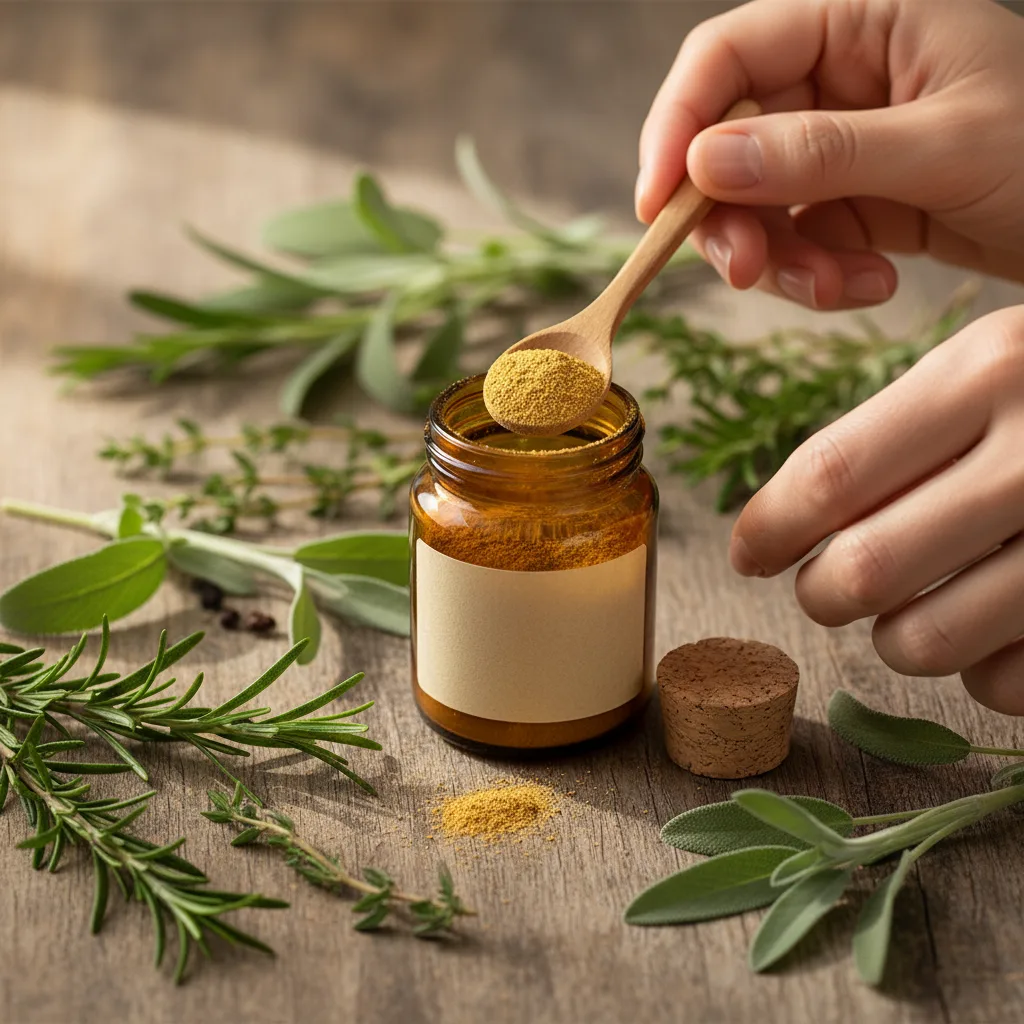
Selecting powdered or liquid extracts depends on application requirements and supply chain priorities. Powdered extracts are preferred for shelf stability, ease of transport, and integration into dry blends. Liquids facilitate rapid dispersion in formulations, making them valuable for topical applications and certain beverages. Manufacturers evaluate factors such as solubility, particle size, and hygroscopicity when choosing extract form; encapsulation and carrier selection influence performance and support benefits such as improved bioavailability in turmeric supplements.
Application Sectors: Where Extracts Add Value
Nutraceuticals, food & beverage, and personal care all incorporate herbal extracts for functional and sensory benefits. Nutraceutical formulators leverage adaptogenic and antioxidant‑rich extracts within multi‑ingredient blends. Functional nutrition trends encourage inclusion of herbal extracts in teas, fortified beverages, and snack formulations where clean labeling and non‑GMO certification drive purchase decisions. In personal care, phytoactive compounds offer antioxidant and soothing properties that align with the clean beauty movement and demand for standardized, traceable extracts.
Regional Dynamics: Growth Hubs and Market Drivers
Asia‑Pacific is a hub for botanical diversity and manufacturing scale, supporting both traditional knowledge and modern extraction innovation. Many suppliers combine cultivation with wildcrafting under regulated harvest protocols to meet global demand; see the Chamomile Extracts Market Outlook for related trends.
North America & Europe emphasize premiumization, regulatory compliance, and rigorous testing. Buyers prioritize supply chain transparency and third‑party certifications when sourcing for dietary supplements, functional foods, and cosmetics.
Latin America & Middle East are building networks that expand ingredient portfolios, particularly for native botanicals and specialty extracts. Investment in processing infrastructure and logistics enhances their contribution to the global market.

Supply Chain Resilience: Testing, Traceability, and Logistics
Consistency in raw material quality is a perennial challenge because of natural variability. Suppliers increasingly invest in traceability systems—such as digital lot tracking and blockchain—to provide provenance and testing records. Analytical testing, including HPLC, GC‑MS, and microbial screening, supports consistent deliverables. Closed‑loop logistics and careful packaging designs further reduce losses and protect extract stability during transit.
Regulatory Alignment and Responsible Communication
Companies must navigate diverse certification and labeling regimes. Emphasizing transparent documentation, third‑party verification, and accurate composition claims helps ensure compliant positioning across markets. Communication strategies focus on supporting healthy function and ingredient quality rather than making disease claims.
Innovation and Personalization in Formulations
Personalized blends and targeted delivery systems are expanding, using techniques such as liposomal encapsulation, nanoemulsions, and fermentation to improve bioavailability and consumer experience. Demand for vegan‑friendly carriers, allergen‑free matrices, and upcycled ingredients is reshaping supplier portfolios. Brands that prioritize formulation transparency and measurable ingredient performance gain stronger consumer loyalty.
Commercial Opportunities: Channels and Partnerships
The shift to direct‑to‑consumer sales channels provides growth avenues for suppliers, while wholesale and private‑label manufacturers look for ingredient partners that can provide stable supply, documentation, and scalable packaging. Wholesale customers favor suppliers with consistent certificate‑of‑analysis (CoA) practices, flexible minimums, and reliable lead times. Digital product content, including technical sheets and traceability links, supports conversion in e‑commerce environments.
Practical Sourcing Checklist for 2026 Buyers
- Verify non‑GMO and organic certifications through third‑party documentation.
- Request full CoAs with phytochemical markers and contaminants testing.
- Ask about extraction method and solvent use to confirm ‘green’ credentials.
- Assess supply diversification to minimize single‑source vulnerabilities.
- Confirm packaging and storage recommendations to preserve stability.
Strategic Outlook
The herbal extracts market is set to grow as more industries incorporate botanicals into products built for clean‑label and sustainable positioning. Investments in green extraction, supply chain transparency, and validated delivery systems will be decisive in meeting buyer expectations. Market players who combine traceable sourcing with scientific documentation and sustainable practices will be well positioned for long‑term success. For ongoing market updates and deeper segmentation insights, review this industry overview: Market Outlook and Size Projections.
Note: This article focuses on market trends, sourcing strategies, and formulation considerations. It does not make medical claims or provide diagnosis or treatment guidance. Always consult relevant regulatory guidance and qualified technical experts when developing new formulations.
Ready to refine your ingredient strategy for 2026? Prioritize verified organic and non‑GMO botanicals, confirm green extraction credentials, and request full certificates of analysis to support formulation and compliance. For additional market context and segmentation data, review this industry overview: https://www.openpr.com/news/4404352/herbal-extracts-market-size-to-reach-usd-65-21-billion-by-2035
Frequently Asked Questions
-
What are the primary drivers shaping the herbal extracts market in 2026?
Key drivers include consumer demand for clean‑label and non‑GMO ingredients, advances in green extraction technologies, and growing applications in food, personal care, and nutraceuticals. Traceability, sustainability practices, and better bioavailability options also influence procurement and formulation decisions across the supply chain.
-
How should buyers verify non‑GMO and organic claims for herbal extracts?
Buyers should require third‑party certifications, full chain‑of‑custody documentation, and batch‑level certificates of analysis. Independent testing for residual solvents and common contaminants adds confidence. For a deeper guide, review Can You Trust Vitamin and Supplement Labels? Truths for 2026 Shoppers.
-
What advantages do green extraction methods bring to formulators?
Green extraction methods increase phytochemical concentration while reducing solvent residues and energy use. They deliver more consistent extract profiles, enabling predictable formulation outcomes and aligning with sustainability commitments sought by many brands and consumers.
-
When should a manufacturer choose powdered extracts versus liquid extracts?
Powdered extracts are preferred for shelf stability, storage efficiency, and integration into dry blends. Liquid extracts offer faster dispersion and are often used in topical or beverage applications. Selection depends on solubility, required dose uniformity, packaging, and supply chain considerations—see more in Herbal Supplements Market Trends.
-
What role does regional sourcing play in supply chain resilience?
Regional sourcing diversifies access to raw materials, reduces single‑source risk, and supports local agricultural economies. Partnering with multiple growing regions also helps manage seasonal variability and regulatory differences, improving continuity for manufacturers and wholesalers.
-
How do I assess bioavailability claims for botanical extracts?
Assess bioavailability claims by reviewing independent studies, analytical data, and delivery technology details such as encapsulation or emulsification methods. Look for validated in vitro or in vivo data that aligns with your application, and request stability and release profiles relevant to your formulation.
-
What documentation is standard to request from a reputable supplier?
Standard documents include certificates of analysis (CoA), provenance and cultivation records, extraction method descriptions, third‑party certifications, and testing for heavy metals, pesticides, and microbes. Packaging and storage recommendations should also be provided to preserve ingredient integrity.
-
How are sustainability and ethical harvesting integrated into sourcing strategies?
Sustainability is integrated via regenerative agricultural practices, fair labor agreements, and controlled wildcrafting protocols. Suppliers may implement traceability audits, farmer training programs, and investment in community development. For further reading, see Baobab Ingredient Market Trends, Segmentation, and Sustainable Sourcing Insights for 2026.
-
What trends in personalization are influencing herbal extract formulations?
Personalization trends drive demand for targeted blends, life‑stage formulations, and delivery systems that improve absorption. Brands increasingly use consumer data to create niche offerings and tailor product lines while emphasizing ingredient transparency and measurable performance.
-
How can e‑commerce channels support growth for herbal extract suppliers?
E‑commerce enables direct access to end consumers and niche markets while giving suppliers opportunities to showcase technical documentation and traceability. Digital product content, educational materials, and transparent sourcing information improve buyer confidence and support conversion online.