


Thermal Processing and Carbonization of Herbal Medicines: Nanoscale Innovations and Quality Advances 2026
Harnessing Heat to Enhance Botanicals: Modern Advances in Thermal Carbonization
Thermal carbonization of botanicals is reshaping how plant-derived materials are processed for increased functional potential. This article explains contemporary, evidence-framed advances in controlled heat treatments that create nanoscale and porous structures, and how quality systems and analytical controls are being applied to ensure reproducibility and safety. The primary focus is on process science, material architecture, and measures for consistent manufacturing.
Controlled Thermal Carbonization: Benefits for Functional Performance
Controlled thermal carbonization of botanicals uses precise heat regimes to alter both chemistry and microstructure. Producers apply standardized temperature profiles to manage transformations such as glycoside breakdown and pigment formation while minimizing undesired byproducts.
Modern approaches emphasize reproducibility, enabling botanical processors to deliver consistent materials with predictable characteristics. This shift toward process control supports scalable production and is aligned with sustainable sourcing and non-GMO raw material preferences.
Integrating Traditional Methods with Process Engineering
Many carbonization techniques trace to historical preparation methods. Modern engineering adapts those techniques to ensure batch-to-batch consistency and objective endpoint measurements. This movement parallels larger trends in the medicinal and aromatic plant market as well, where innovation merges with tradition.
Mechanized and Automated Carbonization Methods
- Electromagnetic stir-frying and controlled rotary systems produce uniform heat exposure while reducing operator variability.
- Non-contact infrared and embedded thermocouple arrays provide precise surface and core temperature data to avoid over-processing.
- Advanced exhaust and atmosphere control limit oxidative damage and help manage volatile profiles.
These methods are increasingly paired with data logging and process analytical technology (PAT) to document manufacturing history and support quality audits. Implementing advanced controls also supports the expansion of herbal extract markets seeking to scale while preserving traditional values.
Alternative Heating Modalities and Their Use Cases
- Enclosed calcination systems are used for lightweight botanicals that pose fire or dust risks, enabling fine temperature control.
- Sand bath and indirect heating methods provide gentle, uniform energy transfer for delicate plant matrices.
- Microwave-assisted carbonization offers rapid volumetric heating; it can shorten cycles and sometimes improve retention of heat-sensitive components but requires careful validation for scale-up.
Each method has trade-offs in energy use, equipment cost, and suitability for specific botanicals; selection depends on product specification and targeted material attributes.
Chemical Transformations During Thermal Carbonization
Thermal carbonization of botanicals drives predictable chemical shifts that processors can monitor and tune.
Typical Transformations and Practical Implications
- Glycoside to aglycone conversion often increases the relative abundance of smaller, more readily extractable molecules; processors monitor these endpoints to predict downstream behavior.
- Tannins and large polyphenols can depolymerize into smaller phenolic acids, which may alter taste, color, and reactivity in formulated products.
- Maillard and dehydration reactions create melanoidins and pigments that influence appearance and contribute to antioxidant-like activity in some assays.
- Decarboxylation and thermal rearrangements can moderate acidity and change solubility profiles, informing formulation decisions.
Processors use targeted analytical methods to understand how these molecular changes relate to product performance while avoiding overstatement about clinical outcomes. Advances in bioavailable herbal supplements emphasize such careful characterization.
Designing Nanoscale and Porous Architectures
Beyond chemistry, thermal carbonization of botanicals can generate notable changes in physical architecture that influence functional properties.
Porous Carbon Matrices and Surface Area
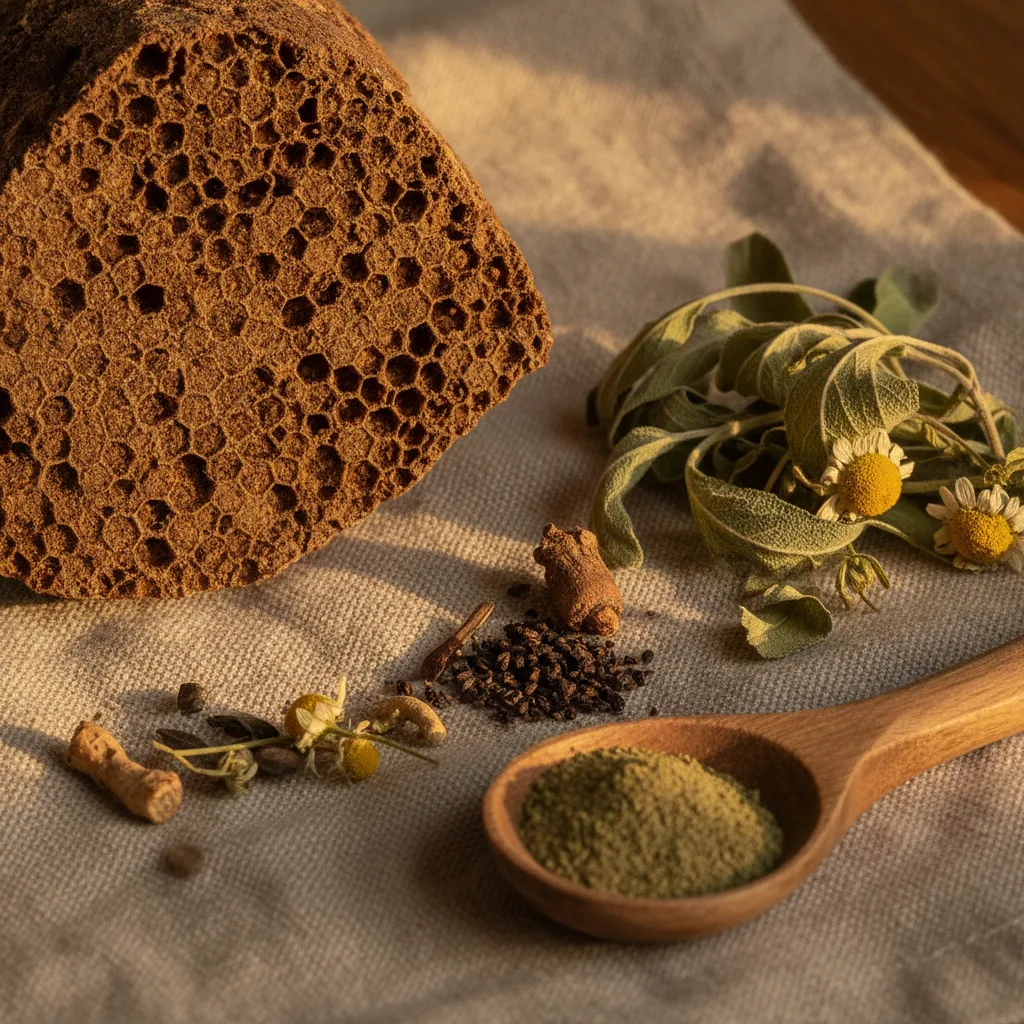
Heat-induced cell wall collapse and rearrangement can produce honeycomb-like or lamellar microstructures with expanded surface area. Increased surface area supports higher adsorption capacity, which can be useful in formulation stabilization, encapsulation strategies, and controlled release studies.

Carbon Dots and Nano-Fractions
- Small fluorescent particles sometimes observed in carbonized plant matrices—often described as carbon dots—exhibit optical properties and high surface reactivity.
- Processing parameters (temperature, time, atmosphere) influence lattice spacing and surface functionality, which in turn affect interactions with other formulation components.
These nanoscale features are of scientific interest for advanced formulation research and may impact the superfood market growth and sustainability outlook, but must be characterized thoroughly to determine functional relevance for specific end uses.
Objective Quality Metrics and Instrumented Endpoints
Thermal carbonization historically relied on organoleptic assessment. Modern producers are adopting objective, instrument-based criteria to ensure consistent endpoints. This is an essential development as formulators optimize metabolic wellness and demand reproducible quality controls.
Objective Tools for Reproducible Outcomes
- Colorimetry provides quantifiable color coordinates that correlate with chemical endpoints and processing intensity.
- Near-infrared (NIR) spectroscopy, when combined with calibrated machine learning models, can predict processing stage and key analyte ranges rapidly.
- Electronic sensor arrays (electronic noses and tongues) translate volatile and gustatory profiles into reproducible signatures for lot classification.
These technologies reduce reliance on subjective judgment and support quality-by-design approaches across production scales, and are discussed further in Thermal processing transforms botanicals into nanoscale and porous materials.
Safety, Monitoring, and Byproduct Control
Responsible thermal carbonization requires vigilance around potential thermal byproducts. Excessive heating can create undesired compounds; modern workflows emphasize monitoring and mitigation.
Key Hazard Considerations and Mitigation Strategies
- Potential byproducts such as polycyclic aromatic hydrocarbons (PAHs), acrylamide, and furans can form under uncontrolled conditions; validated analytical testing and process limits help manage this risk.
- Controlled temperature ramps, atmosphere control (e.g., inert gas purging), and rapid cooling protocols reduce formation and promote consistent chemistry.
- Documented testing protocols and supplier qualification for raw botanicals are essential to meet evolving regulatory expectations, aligning with priorities in herbal remedies for cellular support.
Adopting validated assays and including byproduct checks in quality specifications improves transparency and helps producers meet third-party audit expectations.
Functional Applications and Evidence Framing
The unique chemical and structural profiles of carbonized botanicals support a variety of product design goals. It is important to frame benefits as functional or supportive rather than therapeutic.
Examples of Functional Applications
- Materials with expanded surface area can be incorporated into formulations to enhance adsorption of flavor or aroma molecules, or to serve as carriers for targeted compound release.
- Nanostructured fractions can aid analytical detection and may have utility in research-stage delivery platforms; however, their role should be characterized in product-specific studies such as those highlighted in the unveiling of Konyak Naga herbs.
- Modulated acidity and reduced astringency following controlled carbonization can improve organoleptic properties for certain botanical preparations.
Where preliminary research suggests effects on physiological parameters, processors and marketers should present findings with careful language that clarifies the level of evidence and does not assert medical claims. Useful context is provided in Thermal processing transforms botanicals into nanoscale and porous materials.
Research Needs, Standardization, and Regulatory Alignment
As thermal carbonization techniques evolve, harmonized standards and robust research are needed to align industry practice with regulatory expectations. These steps echo the direction of the U.S. complementary and alternative medicine market and efforts to ensure global scientific credibility.
Priority Actions for the Field
- Develop standardized analytical endpoints for commonly used botanicals and publish reproducible protocols for byproduct testing.
- Conduct fractionation and reconstitution studies to disentangle the roles of small molecules versus nano-fractions in observed functional effects.
- Share open datasets and validated spectral libraries to improve model transferability for NIR and chemometric tools.
Collaborative efforts between academic labs, industry consortia, and standards organizations will accelerate safe, transparent adoption of advanced carbonization methods.
Practical Guidance for Manufacturers and Formulators
- Define clear product specifications that include target analyte ranges, allowed processing temperature profiles, and limits for known thermal byproducts.
- Implement PAT tools to monitor critical process parameters in real time and maintain thorough batch records.
- Validate alternative heating technologies with pilot-scale studies before full-scale adoption, a strategy increasingly recognized in organic herbal tea cultivation.
Following these steps helps reduce variability and supports claims that describe functional properties without implying therapeutic effects.
Further Technical Resources
For expanded technical review of processing parameters, nanoscale characterization, and analytical methods, see this technical resource: Thermal processing transforms botanicals into nanoscale and porous materials. Additional methodology notes and case studies are discussed in that review and can inform validation plans for new products.
You can also review the same resource for deeper discussion on quality control and safety monitoring: Thermal processing transforms botanicals into nanoscale and porous materials.
For guidance on process analytical technologies and spectral modeling, the following review provides technical context: Thermal processing transforms botanicals into nanoscale and porous materials.
Closing Perspective
Thermal carbonization of botanicals offers an avenue to rework traditional preparation techniques into reproducible, scalable processes. By combining careful process design, analytical rigor, and transparent reporting, manufacturers can produce high-quality botanical ingredients aligned with sustainability and non-GMO preferences. Continued research, standardization, and conservative evidence framing will be critical as the field matures.
Learn more about process innovation, analytical validation, and safety protocols for thermally carbonized botanicals by reviewing technical resources and guidance documents. For detailed methodology and case studies, consult the technical review at https://bioengineer.org/thermal-processing-transforms-herbal-medicines-into-nanoscale-and-porous-therapeutic-materials/.
FAQs
-
What is thermal carbonization of botanicals and why is it used?
Thermal carbonization of botanicals is a controlled heat process that alters plant chemistry and microstructure to produce porous, carbon-rich matrices and nano-fractions. It is used to tune physicochemical properties such as solubility, surface area, and organoleptic profile for improved handling, formulation, and potential functional performance in non-therapeutic applications.
-
How does thermal carbonization affect the chemistry of plant compounds?
Heating induces predictable reactions—glycoside breakdown into aglycones, depolymerization of tannins, Maillard-derived pigment formation, and decarboxylation—that change solubility, color, and reactivity. Process parameters determine the balance of these transformations, so precise control is used to target desirable chemical profiles while minimizing unwanted byproducts.
-
What are the main safety concerns when using high-heat botanical processing?
Excessive heating can generate thermal byproducts such as polycyclic aromatic hydrocarbons, acrylamide, and certain furans. Mitigation strategies include validated temperature profiles, atmosphere control, rapid cooling, and routine analytical testing to ensure byproduct levels remain within acceptable limits defined by regulatory authorities or industry standards.
-
What analytical tools help ensure consistent carbonization outcomes?
Key tools include colorimetry for visual endpoints, NIR spectroscopy combined with chemometric models for rapid stage classification, electronic sensor arrays for aroma/taste signatures, and targeted chromatographic assays for key analytes and contaminant screening. Integrated process analytical technology (PAT) supports real-time monitoring and documentation, just as outlined in leading industry reviews.
-
Are nanoscale fractions from carbonized botanicals safe to use?
Nanoscale fractions such as carbon dots require thorough characterization for size, surface chemistry, and residual contaminants. Safety assessment depends on intended application, exposure route, and dose; risk evaluations and validated analytical methods should be completed prior to use in formulated products to ensure appropriate safety margins.
-
Can microwave-assisted carbonization be implemented at industrial scale?
Microwave-assisted carbonization offers faster volumetric heating and potential retention of heat-sensitive components, but industrial scale-up requires validation of energy distribution, product uniformity, and safety controls. Pilot testing and scaling studies are recommended before adopting the technology broadly.
-
How should manufacturers specify quality for carbonized botanical ingredients?
Specifications should include processing parameters (temperature ranges, residence time), target analyte windows, limits for known thermal byproducts, moisture and particle-size limits, and accepted test methods. Including stability and accelerated aging data strengthens the specification and supports regulatory compliance in a developing herbal extract market.
-
What research is needed to better understand functional effects of carbonized botanicals?
Priority research includes fractionation and reconstitution experiments that separate small molecules from nano-fractions, repeated in vitro and controlled human studies focused on defined, non-therapeutic functional endpoints, and reproducible manufacturing validation studies to link processing parameters with material attributes and safety data.